
Appliance Technical Guide

Why is the dishwasher not cleaning dishes well?

Diagnostic insights and practical maintenance solutions for cloudy glasses, stubborn food residue, and underperforming dishwasher cycles.

August 5, 2026
Author: James K.
5 min read
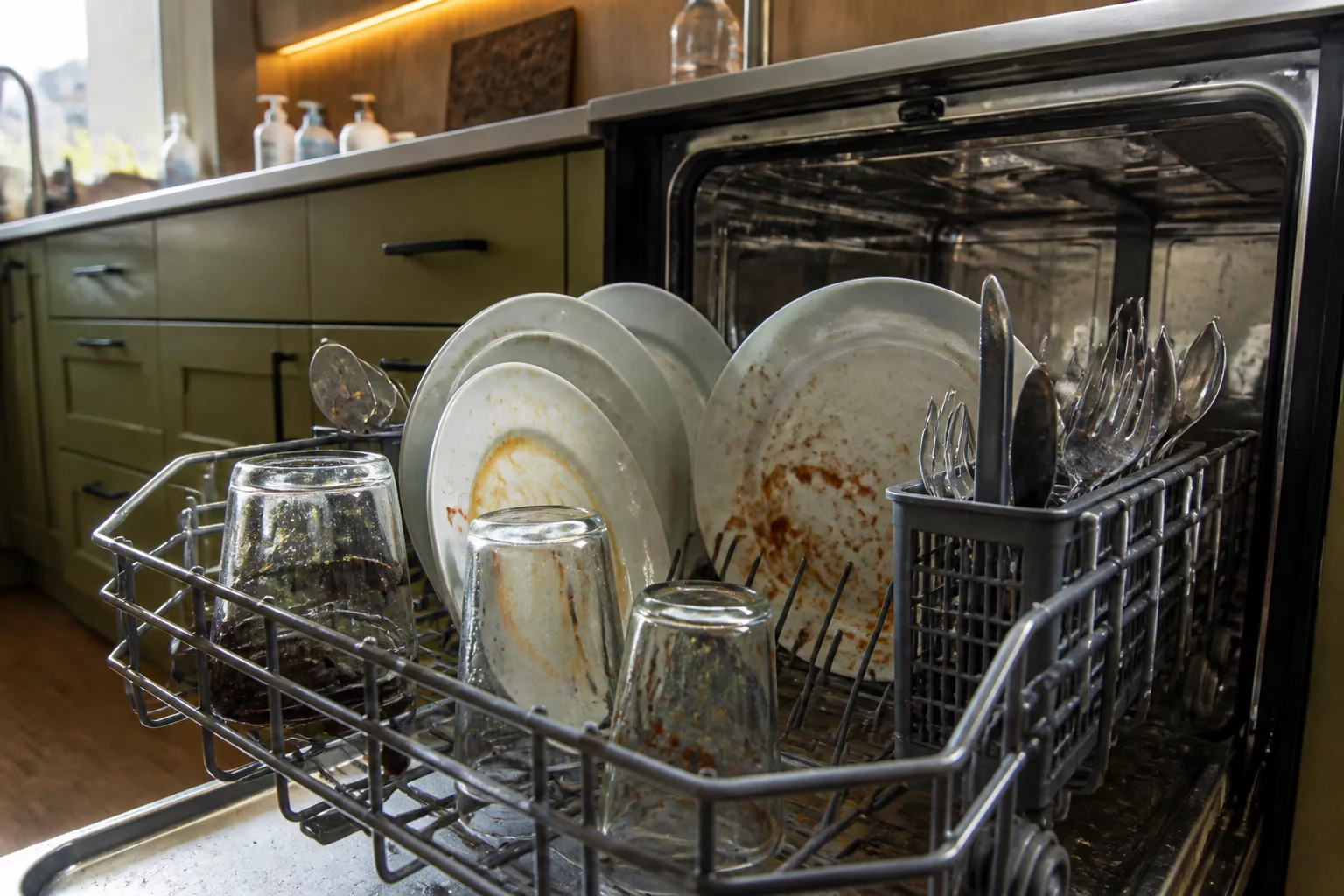
Dirty dishes remaining in a dishwasher after a cycle.

Primary Reasons Your Dishwasher Leaves Dishes Dirty

Finding food residue, greasy films, or grainy deposits on plates right after a complete washing cycle indicates that water circulation, heating, or filtration has been compromised. Over time, grease particles and hard water minerals accumulate in narrow passageways, restricting the flow of high-pressure water necessary to dissolve dried-on food.

Key Diagnostic Note

Always inspect the spray arm nozzles before starting a wash cycle. Seeds, citrus pulp, and mineral scales frequently plug the tiny water jets, drastically weakening spray coverage across the upper and lower baskets.

Key Components to Check and Maintain

Several interconnected parts inside the wash tub work in tandem to scrub and rinse tableware. When any of these components fails or suffers from neglect, cleaning effectiveness drops noticeably.

Clogged Spray Arm Jets

Restricted spray holes prevent rotational motion and lower pressure, leaving outer dishes unwashed.

Dirty Base Filter Mesh

A congested filter recirculates dirty water and greasy debris back over clean plates and glassware.

Step-by-Step Inspection Checklist

  • Detach the lower and upper spray arms, clearing any debris from nozzles using a soft brush or toothpick.
  • Unlock the cylindrical fine mesh filter at the bottom of the tub, washing it under hot running water with dish soap.
  • Check the water inlet temperature and ensure the detergent compartment flap opens unhindered during operation.

Frequently Asked Questions

Customer Experiences & Discussion

3 Insights
Anna

Anna

Verified Client

Reviewed on Dishwasher Care • 08/01/2026

Cleaning the filter worked!

Chris
Chris

Response • 08/02/2026

Thanks for the tips.

Paul

Paul

Verified Client

Reviewed on Maintenance • 08/03/2026

Very informative article.

Leave a Comment

Share your feedback, appliance model observations, or questions with our technical team.

Service guide

Improving Dishwasher Cleaning Results

Check loading and detergent

Avoid blocking spray arms with large dishes, use detergent intended for dishwashers, and choose a cycle appropriate for the load. Hard-water conditions and detergent dosage can affect results.

Clean accessible parts

Follow the manual to clean the filter and inspect visible spray-arm openings. Switch off the appliance before removing user-serviceable parts, and reinstall everything correctly.

When a repair may be needed

Persistent poor cleaning can involve low water fill, a circulation pump, spray-arm drive, heating system, inlet valve, sensor, or drainage fault. Diagnosis should consider water quality and loading as well as components.

Watch for warning signs

Stop using the dishwasher if water leaks near electrical connections, there is a burning smell, or the unit repeatedly trips power. Do not remove the base panel or attempt live electrical testing.

Detailed repair information

Why a Dishwasher Leaves Dishes Dirty: Detailed Checks

Poor cleaning is often the result of several small factors working together: blocked spray jets, restricted circulation, incorrect loading, detergent issues, low water temperature or a filter that needs attention. Check the simplest manufacturer-approved causes first, then seek service if performance remains poor.

Spray arms cannot rotate or spray correctly

Tall plates, utensils or cookware can obstruct the arms, while food particles and mineral deposits can block the spray openings. With the dishwasher off and cool, remove and clean user-accessible arms only if the manual permits it. Make sure they rotate freely when reinstalled.

The filter is dirty or water cannot circulate well

A clogged filter can trap debris and affect drainage and cleaning. Clean it according to the manual, taking care around sharp food fragments. If the filter is clean but the wash remains weak, a circulation pump, diverter or water-level problem may be involved.

Detergent is not dissolving or dishes are overloaded

Use the correct detergent and amount for the appliance and local water conditions. Do not block the dispenser with a plate or pan, and avoid nesting dishes together. Very short or low-temperature cycles may not suit heavily soiled cookware.

The appliance may not be heating water properly

If dishes remain greasy, the cycle is unusually long or a heating-related code appears, the heater, temperature sensor or control system may need assessment. Do not open the appliance to test electrical components.

How diagnosis and repair should work

Record which items remain dirty, where they sit in the racks, the programme used and whether the detergent dispenser opens. A technician may evaluate water filling, circulation pressure, spray-arm movement, drainage and heating. This step-by-step approach helps separate loading or maintenance issues from a failed component.

Maintenance that may prevent repeat problems

Clean the filter at the interval in the manual, inspect spray arms periodically, use rinse aid where recommended and avoid excessive detergent. Run a manufacturer-approved maintenance cycle when needed, and leave the door ajar after a cycle only if the manufacturer recommends it.

Frequently asked questions

These answers are general guidance. Appliance designs vary, so always follow the manufacturer's manual and use a qualified technician for hazardous or internal repairs.

Why are only the top rack dishes dirty?

The upper spray system, rack alignment, loading pattern or water distribution may be involved. Check for obstructions before booking service.

Can I use hand-washing liquid in a dishwasher?

No. It can create excessive foam and cause leaks. Use detergent specifically formulated for dishwashers.

When should I call a technician?

If cleaning remains poor after safe maintenance checks, the machine does not heat or circulate properly, or it leaks or displays a persistent fault code.

Safety comes first

Stop using an appliance if you notice smoke, a burning smell, exposed wiring, repeated electrical tripping, a gas smell, a damaged microwave door or water near electrical components. Do not bypass safety devices or open sealed/high-voltage systems. Isolate power or water only when it is safe to do so and contact an appropriately qualified service professional.