Certified Technical Service

Professional Washing Machine Repair in Ajman

Get dependable diagnostics and precision repairs for front-load and top-load washers. Our qualified technicians resolve drainage failures, drum noise, electrical glitches, and water leaks using genuine manufacturer parts.

August 29, 2026
Service Team
Same-Day Response
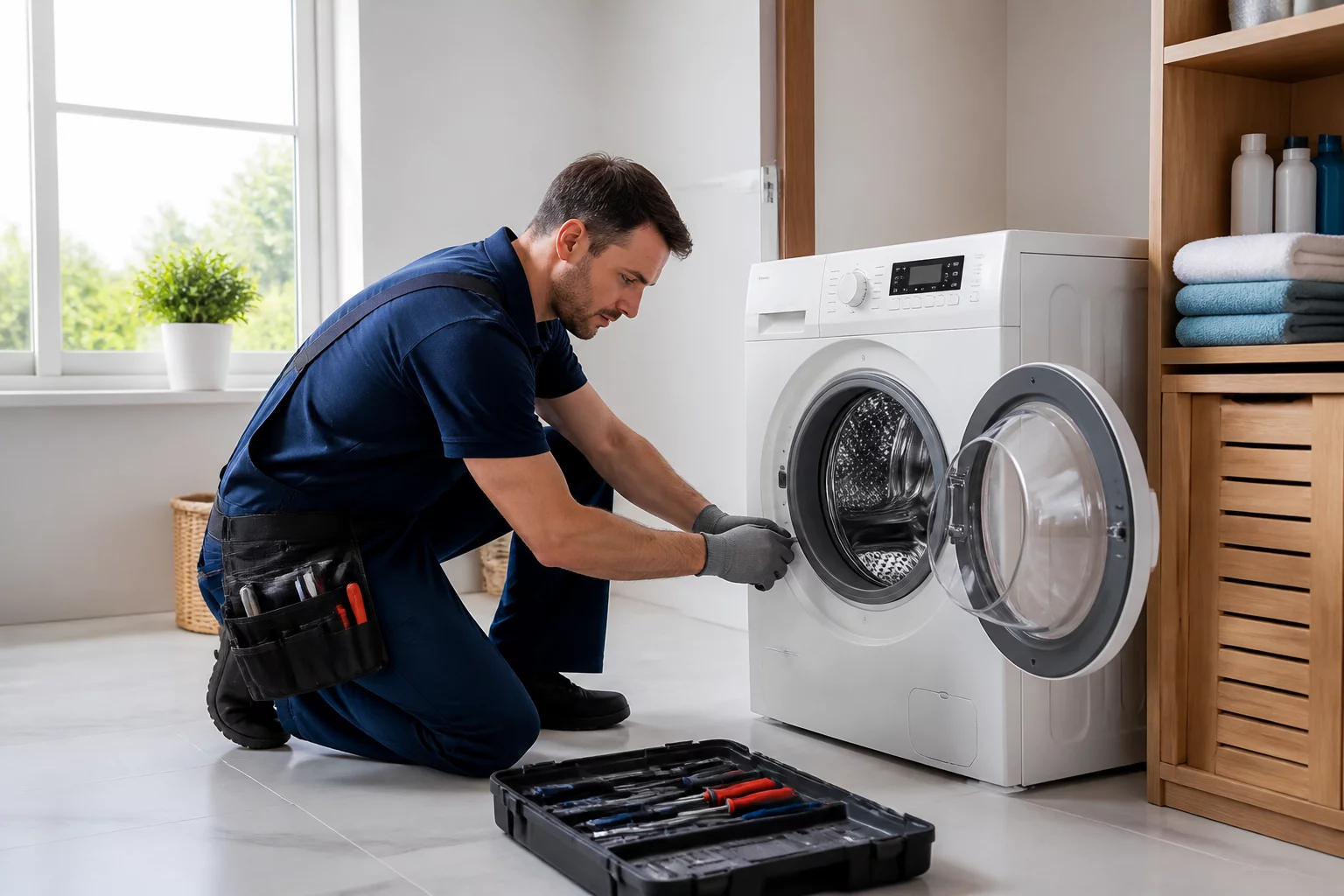
Washing Machine Repair technician inspecting drum mechanism

Comprehensive Troubleshooting for Automatic Washers

Modern automatic washing machines combine high-torque inverter motors, electronic control modules, and water regulation valves to manage complex wash cycles. When any internal sensor or mechanical actuator malfunctions, cycles stop prematurely, spin modes vibrate violently, or water remains trapped in the drum. Our certified technicians carry specialized diagnostic equipment to quickly pinpoint hardware faults, test voltage continuity, and verify electronic board communication without unnecessary disassembly.

Key Diagnostic Note

Before inspecting water hoses, pump filters, or internal wiring harnesses, disconnect the machine from the main power outlet and close the supply valves to prevent accidental electric shocks or unwanted water leaks.

Common Washing Machine Issues Repaired On-Site

Washing machine problems typically develop from heavy everyday usage, mineral scale buildup, or mechanical wear over time. Our service vans are fully stocked with high-demand parts such as drain pumps, drive belts, pressure switches, door locks, and water intake solenoids, enabling prompt on-site resolution across residential districts in Ajman.

Drainage & Pump Service

Clearance of clogged impeller chambers, restoration of discharge lines, and installation of durable replacement drain motors.

Drum Bearings & Drive Belt

Precision replacement of worn drum bearings, shock dampers, and drive belts to eliminate grinding noises and heavy vibration.

Step-by-Step Inspection Checklist

  • Unscrew and clean the debris filter trap located at the bottom front corner to remove stuck coins, lint, and buttons.
  • Examine cold and hot water inlet mesh filters for sediment accumulation or kinked supply lines restricting proper intake.
  • Check the machine leveling on all four rubber feet using a spirit level to prevent severe dynamic wobble during high-speed spins.

Frequently Asked Questions

Customer Experiences & Discussion

0 Comments

No comments yet. Be the first to share your experience or ask a repair question.

Leave a Comment

Share your feedback, appliance model observations, or questions with our technical team.

Service guide

A More Reliable Washing Machine Repair Visit

What to note before booking

Record whether the washer fills, agitates, drains, and spins; whether the issue occurs with every cycle; and whether any error code appears. Note unusual grinding, repeated clicking, leaks, or a burning smell.

Checks that can be done safely

If there is no sign of electrical danger or a leak near a power connection, check that the door is fully closed, the water supply is on, and the selected cycle is appropriate. Consult the user manual before cleaning accessible filters.

What a technician may inspect

Depending on symptoms, diagnosis may involve the drain pump, inlet valve, door lock, suspension, drive system, pressure sensing, wiring, or control electronics. Not every symptom points to the same failed component.

Protect the appliance

Avoid repeatedly restarting a washer that is leaking, tripping a breaker, or making severe mechanical noise. Stop the cycle and arrange a professional inspection if the fault persists.

Detailed repair information

A Detailed Guide to Washing Machine Repair

A washing machine combines water supply, drainage, a drive system, sensors and electronic controls. A fault in one area can affect several stages of a wash cycle, so the most useful first step is to identify exactly when the problem occurs rather than replacing parts based on a single symptom.

Washer will not start or the door will not lock

Check that the appliance is receiving power, the selected programme is valid and the door closes without clothing caught in the seal. Many machines will not begin until the door-lock circuit confirms that the door is secure. Persistent clicking, a flashing lock indicator or a cycle that stops immediately can require inspection of the lock, wiring or control system. Do not force the door open or bypass its safety interlock.

Water is not entering or the tub fills slowly

Confirm that the household water supply is on and that the inlet hose is not visibly kinked. Low water pressure, a blocked inlet screen, a faulty inlet valve or a water-level sensing problem can all produce similar symptoms. Turn off the supply before disconnecting any hose, and only clean user-accessible filters in the manner described by the manufacturer.

The washer shakes, bangs or makes grinding sounds

An uneven load or an appliance that is not level can cause vibration, especially during high-speed spin. Redistribute bulky items and check that the machine stands firmly on the floor. Repeated heavy banging with an empty drum, a rough rumbling sound or visible drum movement may indicate worn suspension, bearings or other mechanical components and should be assessed before continued use.

Water remains in the drum or appears on the floor

A blocked filter, obstructed drain hose, drain-pump fault, damaged hose or door seal can prevent normal drainage or cause leakage. Stop the cycle if water is escaping. Before checking an accessible filter, disconnect power and follow the manual because trapped water may spill out. Electrical components and internal pump wiring should be left to a qualified technician.

How diagnosis and repair should work

A thorough service visit usually begins with the model number, the displayed error code and the cycle stage at which the fault occurs. The technician can then inspect the external water and drain connections, check accessible filters, test the relevant electrical and mechanical components, and explain the proposed repair before replacing parts. After the repair, a controlled test cycle should confirm filling, washing, draining and spinning without abnormal noise or leakage.

Maintenance that may prevent repeat problems

Use the detergent type and dose recommended for your machine, avoid overloading the drum, leave the door and dispenser open briefly after use if the manufacturer recommends it, and clean the dispenser and accessible filter on the stated schedule. Periodically check hoses for bulges, cracks or damp connections. If the machine is transported or installed again, ensure it is level and that any required transit bolts are handled according to the manual.

Frequently asked questions

These answers are general guidance. Appliance designs vary, so always follow the manufacturer's manual and use a qualified technician for hazardous or internal repairs.

Can I keep using a washer that makes a loud grinding noise?

It is safer to stop the cycle if the noise is severe or new. Continued operation can worsen mechanical damage. Record when the noise happens and arrange an inspection.

Does every drainage problem mean the pump has failed?

No. A blocked filter, kinked hose, installation issue or obstruction can produce similar symptoms. Diagnosis should come before a pump replacement.

What information should I provide when booking?

Share the brand, model if available, error code, approximate age, symptom, when it occurs and whether the machine has leaked or tripped the electricity supply.

Safety comes first

Stop using an appliance if you notice smoke, a burning smell, exposed wiring, repeated electrical tripping, a gas smell, a damaged microwave door or water near electrical components. Do not bypass safety devices or open sealed/high-voltage systems. Isolate power or water only when it is safe to do so and contact an appropriately qualified service professional.