Appliance Technical Guide

Main reasons why the dryer is not heating

When your clothes dryer tumbles laundry normally but leaves garments damp and cold, electrical and airflow components are usually the root cause. Discover how technicians troubleshoot heating assemblies, safety switches, and ventilation paths.

August 12, 2026
Author: Robert W.
6 min read
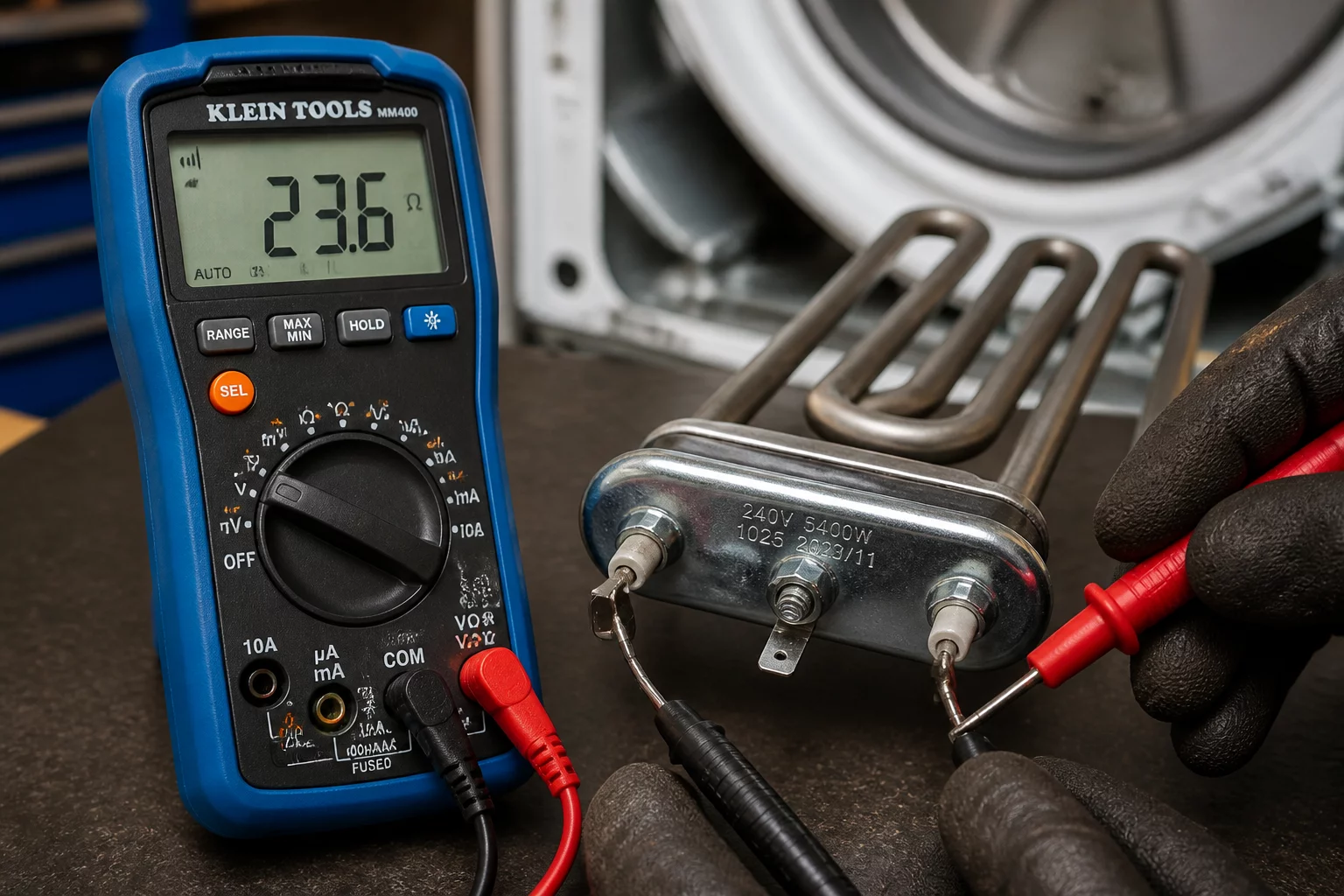
Checking the heating element of a clothes dryer.

Why Clothes Dryers Lose Heating Power

Clothes dryers depend on an unbroken thermal circuit consisting of heating coils, regulation thermostats, airflow sensors, and safety fuses. When the drive motor turns the drum, a dedicated electrical circuit powers the heating element. If any single component in this sequence fails or detects an overheating danger, the control board disables thermal generation while keeping mechanical rotation active to prevent fabric scorches or fire hazards.

Key Diagnostic Note

Always inspect your circuit breaker board first. Electric dryers operate on dual 120V lines combining into 240V. A partial breaker trip allows the drum motor to spin on 120V while leaving the heating element unpowered.

Primary Mechanical and Electrical Causes

Prolonged heat cycling, heavy laundry loads, and lint accumulation subject heating components to constant wear. Identifying the exact failed part requires isolating the circuit with a multimeter and inspecting physical connections around the heating duct assembly.

Burnt Heating Element

The nichrome resistance coil snaps under sustained thermal strain, breaking electrical continuity and preventing any heat generation.

Tripped Thermal Fuse

Clogged exhaust ducts trap excessive heat inside the cabinet, permanently blowing the safety fuse to prevent appliance fires.

Step-by-Step Inspection Checklist

  • Disconnect the appliance from main electricity and clear lint from the exhaust duct and outdoor vent hood.
  • Access the rear heating housing and test continuity across the thermal cutoff switches and cycling thermostat terminals.
  • Measure resistance on the heating element terminals; an open circuit with zero continuity confirms element failure.

Frequently Asked Questions

Customer Experiences & Discussion

3 Insights
Kevin

Kevin

Verified Client

August 14, 2026

Checked the heating element, it was broken.

Laura

Laura

Verified Client

August 18, 2026

Saved me a lot of time troubleshooting.

Steve

Steve

Verified Client

August 22, 2026

Clear and concise.

Leave a Comment

Share your feedback, appliance model observations, or questions with our technical team.

Service guide

What to Do When a Dryer Has No Heat

Check the operating conditions

Confirm the selected programme and settings, and check that the lint filter and user-accessible ventilation path are clean. Some sensor or low-temperature programmes are designed to run cooler than expected.

Observe the pattern

Note whether the drum turns, whether the cycle completes, whether clothes remain damp, and whether an error code appears. These details can help distinguish an airflow problem from a heating or sensor fault.

Possible technical causes

Depending on the dryer design, causes may include a heating element, thermal cut-out, thermostat, temperature sensor, wiring, control board, or heat-pump system fault.

Do not bypass safety devices

Never bridge a thermal fuse or operate the dryer with covers removed. If it overheats, trips the circuit, or smells burnt, stop using it and arrange inspection.

Detailed repair information

Dryer Not Heating: Safe Troubleshooting and Repair

A dryer that tumbles without producing heat may have an airflow restriction, supply issue, thermal cut-out, heater fault or sensor/control problem. The correct checks depend on whether the appliance is electric, gas, vented, condenser or heat-pump type.

Check the cycle and load conditions first

Confirm that a no-heat or low-heat setting has not been selected and that the load is not too large. Some sensor programmes adjust heat and time based on moisture. Review the manual and compare the selected programme with the fabrics being dried.

Airflow restriction can trigger overheating protection

Clean the lint filter and inspect only the vent or condenser areas that the manufacturer identifies as user-serviceable. Restricted airflow can cause long drying times and repeated shutdowns. Never operate the dryer with a removed filter or blocked ventilation path.

The heater, sensor or supply may need testing

A failed heating element, thermal fuse, thermostat, temperature sensor or control can stop heat. Electric models can also have a supply fault even when the drum motor works. Gas models have separate ignition and combustion systems; do not dismantle or adjust them yourself.

Repeated shutdowns are a warning

If the dryer trips power, smells burnt, becomes unusually hot or makes a new harsh noise, stop using it. Never bridge a fuse or thermostat to keep the dryer running. Safety devices must be replaced only after the underlying cause has been identified.

How diagnosis and repair should work

For a useful diagnosis, note whether the drum turns, whether any heat is present at the start, how long the dryer runs before stopping and whether an error code appears. A technician can inspect airflow, heating components, thermal protection, sensors and controls according to the appliance design, then verify normal operation after repair.

Maintenance that may prevent repeat problems

Clean lint after every cycle, keep ventilation clear, inspect accessible venting regularly and clean heat-pump or condenser filters as instructed. Avoid drying items contaminated with flammable substances unless the care instructions specifically permit it. Keep the appliance surroundings clear of dust and combustible materials.

Frequently asked questions

These answers are general guidance. Appliance designs vary, so always follow the manufacturer's manual and use a qualified technician for hazardous or internal repairs.

The dryer tumbles but has no heat—is the element definitely broken?

No. Airflow, supply, thermal protection, sensors and control faults can create the same symptom.

Can I reset the thermal fuse?

A thermal fuse is generally a one-time safety component and should not be bypassed. The reason it opened must be investigated.

Can I continue drying clothes without heat?

It may be inefficient and could conceal an underlying fault. Stop if there is overheating, smell, noise or repeated shutdown, and arrange diagnosis.

Safety comes first

Stop using an appliance if you notice smoke, a burning smell, exposed wiring, repeated electrical tripping, a gas smell, a damaged microwave door or water near electrical components. Do not bypass safety devices or open sealed/high-voltage systems. Isolate power or water only when it is safe to do so and contact an appropriately qualified service professional.