Appliance Technical Guide

Professional Clothes Dryer Repair & Diagnostics in Ajman

Prompt troubleshooting for all types of tumble dryers, vented units, and condenser models across Ajman with genuine replacement parts and upfront pricing.

August 29, 2026
Author: Michael T.
6 min read
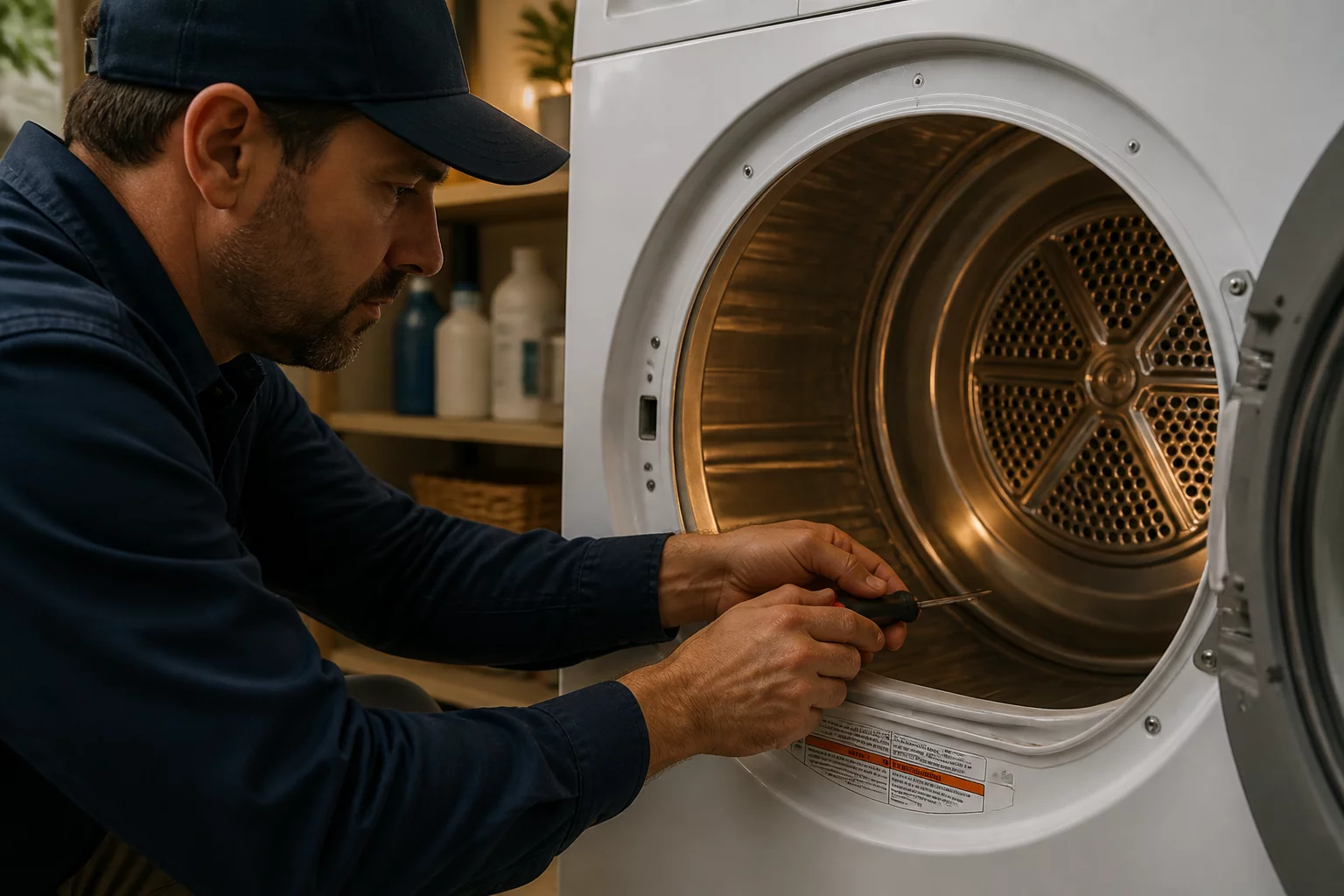
Professional technician inspecting clothes dryer heating components

Comprehensive Diagnostic & Dryer Repair Solutions

Modern dryers rely on a balanced coordination of heating coils, thermal fuses, drive belts, and motor assemblies. When a unit fails to heat, produces unusual screeching sounds, or stops spinning midway through a cycle, immediate inspection prevents further motor strain. Our technicians perform thorough diagnostic tests on heating elements, thermostats, and electronic control boards to pinpoint the exact failure quickly.

Key Diagnostic Note

Before attempting any troubleshooting, ensure the lint screen and external exhaust vent are completely clear of lint buildup. Restricted airflow is responsible for over 60% of thermal fuse trip events in residential tumble dryers.

Common Dryer Malfunctions We Resolve Daily

From front-loading condenser dryers to heavy-duty vented models, our certified engineers handle mechanical wear, electrical failures, and electronic sensor errors across all major appliance brands.

Heating & Thermal Regulation

Rapid replacement of burnt heating elements, cycling thermostats, high-limit fuses, and temperature sensors to restore steady drying cycles.

Drum Drive & Motor Systems

Precision installation of new drum belts, tensioner pulleys, support rollers, and blower fan wheels to eliminate squeaking and drum stalls.

Step-by-Step Inspection Checklist

  • Disconnect electrical power supply and inspect the circuit breaker panel for tripped switches.
  • Examine the drum belt tension and spin the drum manually to detect bearing resistance or worn support rollers.
  • Measure resistance across the heating element and thermal fuse using a digital multimeter to confirm continuity.

Frequently Asked Questions

Customer Experiences & Discussion

0 Comments
No comments yet. Be the first to leave a comment.

Leave a Comment

Share your feedback, appliance model observations, or questions with our technical team.

Service guide

Dryer Diagnosis, Ventilation and Safe Use

Describe the drying problem

Tell us whether the dryer does not start, tumbles without heat, stops early, takes too long, or makes a new noise. Mention whether it is a vented, condenser, or heat-pump model.

Start with manual-approved checks

Allow the dryer to cool, clean the lint filter, and check user-accessible airflow paths as described in the manual. Do not remove panels or reach into moving or electrically live parts.

What may need inspection

Potential causes include restricted airflow, a heating circuit fault, temperature sensors, door switches, drive components, or control electronics. A long drying time does not automatically mean the heater has failed.

Reduce fire risk

Stop using the dryer if you notice smoke, a strong burning smell, damaged wiring, or repeated overheating. Keep lint filters clean and follow the manufacturer's ventilation and clearance instructions.

Detailed repair information

Detailed Clothes Dryer Repair and Performance Guide

A clothes dryer needs balanced airflow, controlled heat and reliable drum movement to dry garments efficiently. A long cycle does not automatically mean the heating element has failed; lint restriction, load size, moisture sensing, venting, power supply and drive components can all affect performance.

Clothes remain damp after a full cycle

Check the load size, selected programme and care labels first. Overloading reduces air circulation, while mixed fabrics can finish at different times. Clean the lint filter as instructed and check any user-accessible airflow path. If drying remains poor, a technician may need to examine the vent path, heating circuit, temperature sensors or moisture sensors.

The dryer runs but produces no heat

Possible causes vary by model and can include a heating element, thermal cut-out, thermostat, power-supply issue, gas ignition system or control fault. Electric dryers may require more than one supply leg to operate correctly, even if the drum still turns. Do not open electrical compartments or bypass thermal safety devices; stop using the unit if there is a burning smell.

The drum does not turn or makes unusual sounds

A broken drive belt, worn support rollers, idler pulley, motor issue or foreign object can prevent normal drum movement. A humming motor with a stationary drum is different from a dryer that is completely unresponsive. Avoid reaching into the machine while it is connected to power and do not continue running it if scraping or grinding is pronounced.

The dryer overheats or shuts down repeatedly

Restricted airflow can raise operating temperatures and trigger protective cut-outs. Clean the lint filter and check that the external vent is not visibly blocked, if it is safe and accessible. If the cabinet becomes unusually hot, the cycle repeatedly stops or a burning odour appears, discontinue use and arrange service.

How diagnosis and repair should work

Diagnosis should consider the dryer type—vented, condenser, heat-pump or gas—as the airflow and heating systems differ. A technician may inspect ventilation, drum rotation, thermal controls, sensors, motor operation and electrical connections, using model-appropriate procedures. The service should conclude with a functional test and clear advice about any vent cleaning, part replacement or installation issue that remains.

Maintenance that may prevent repeat problems

Remove lint from the filter after each cycle, keep the area around the appliance clear, and clean condensers or heat-exchanger filters only as directed by the manufacturer. Do not crush a vent hose behind the dryer. Ensure that the external vent, where fitted, can discharge freely. Never operate a dryer with damaged wiring, a compromised door seal or a safety cut-out that has been bypassed.

Frequently asked questions

These answers are general guidance. Appliance designs vary, so always follow the manufacturer's manual and use a qualified technician for hazardous or internal repairs.

Why does my dryer need more than one cycle?

Common reasons include overloading, restricted airflow, a damp or dirty sensor, a wrong programme or a fault in the heating system. The pattern of the problem helps narrow the cause.

Can I bypass a thermal fuse to finish drying clothes?

No. Thermal cut-outs are safety devices. Bypassing them creates a fire and injury risk; the underlying cause must be found and corrected.

Should I book service if the dryer smells burnt?

Yes. Stop the cycle and disconnect power if it is safe to do so. Do not restart the dryer until it has been inspected.

Safety comes first

Stop using an appliance if you notice smoke, a burning smell, exposed wiring, repeated electrical tripping, a gas smell, a damaged microwave door or water near electrical components. Do not bypass safety devices or open sealed/high-voltage systems. Isolate power or water only when it is safe to do so and contact an appropriately qualified service professional.