
Appliance Technical Guide

Kitchen Appliance Repair Services in Ajman

Professional diagnostics and precision repairs for countertop and small kitchen appliances across Ajman, restoring optimal performance safely.

August 29, 2026
Author: Technical Repair Division
5 min read
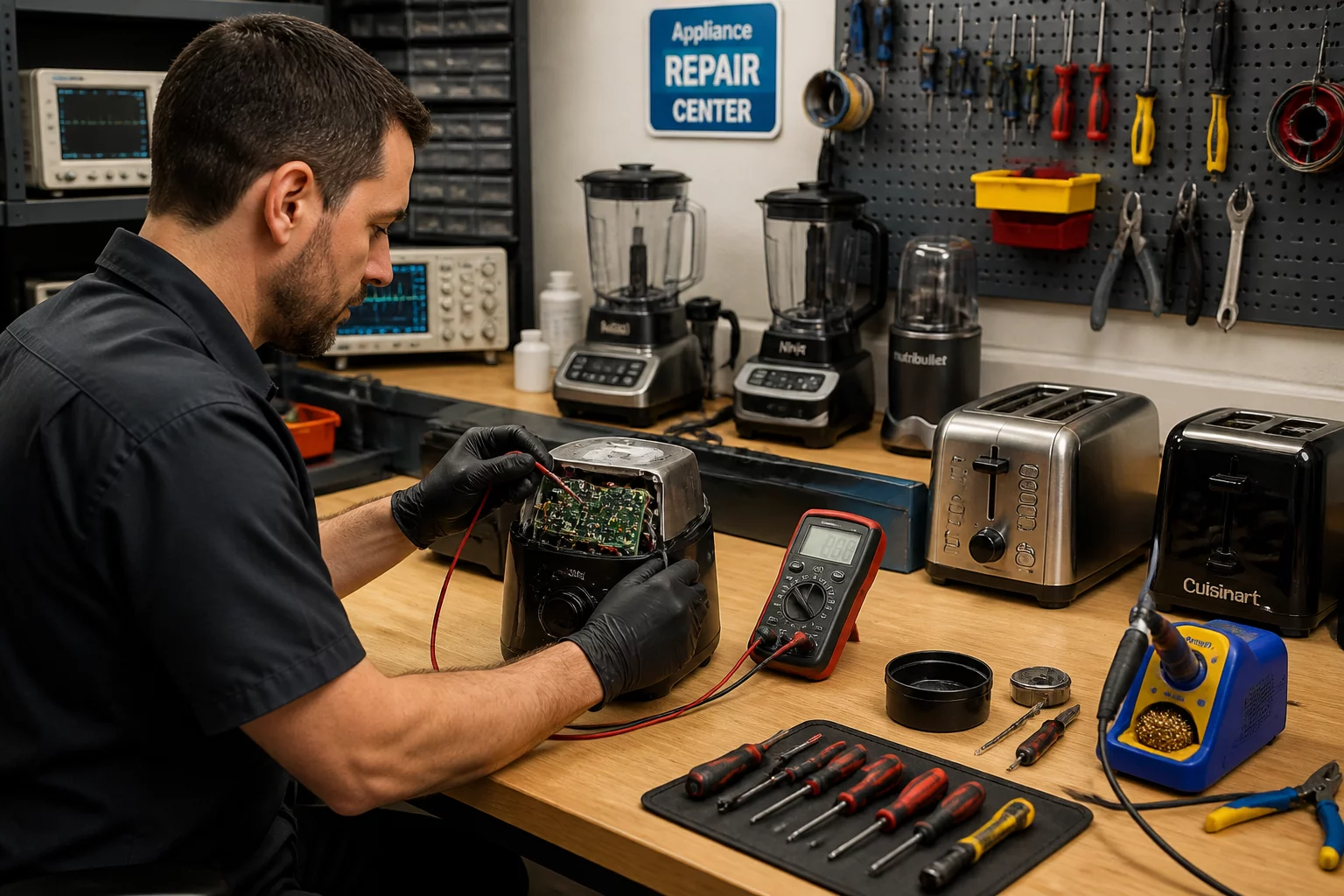
Kitchen appliance repair workbench with professional tools

Expert Troubleshooting for Countertop Appliances

Small kitchen appliances experience continuous thermal stress and mechanical friction throughout daily meal preparation. From food mixers and blenders to toasters, grills, and specialized kitchen gadgets, internal components eventually wear down. Our certified technicians in Ajman thoroughly test circuits, diagnose motor windings, and replace worn drive gears to restore your devices to factory specifications.

Key Diagnostic Note

Never force a jammed blender or food processor blade by repeatedly pressing the pulse switch. Stalling the drive shaft while voltage is applied causes overheating in the motor coils and blows internal thermal safety fuses.

Comprehensive Kitchen Appliance Solutions

Modern kitchen appliances combine microelectronic control boards with mechanical gears and heating coils. When an appliance stops heating, fails to turn, or displays an error, targeted component repair is far more cost-effective than complete replacement.

Motor & Gear Replacement

Renewal of worn drive couplings, planetary gears, carbon brushes, and bearings to eliminate grinding noises and restore rotating torque.

Thermal & Electrical Testing

Accurate testing and replacement of faulty heating filaments, bimetallic thermostats, internal microswitches, and power supply cables.

Step-by-Step Inspection Checklist

  • Examine the power cord, plug terminals, and external casing for visible signs of heat distortion, fractures, or loose connections.
  • Test safety interlock switches, bowl sensors, and lid contact mechanisms to confirm complete electrical circuit closure.
  • Measure electrical resistance across heating elements and thermal fuses using a calibrated digital multimeter.

Frequently Asked Questions

Customer Experiences & Discussion

0 Comments
No comments yet. Be the first to leave a comment about your kitchen appliance repair experience.

Leave a Comment

Share your feedback, appliance model observations, or questions with our technical team.

Service guide

Getting Kitchen Appliances Ready for Diagnosis

Describe the exact appliance

Identify whether the problem concerns a blender, food processor, kettle, mixer, extractor, or another kitchen appliance. Include the brand, model, and the action that triggers the fault.

Prepare it safely

Switch off and unplug a small appliance before cleaning or checking removable accessories. Never immerse a motor base or electrical connector in water unless the manufacturer's instructions explicitly allow it.

Diagnosis depends on design

Faults can involve a motor, coupling, switch, thermostat, power lead, seals, mechanical drive, or control electronics. Parts availability may vary for older or discontinued models.

Compare repair and replacement

For inexpensive or heavily damaged appliances, ask for a repair estimate before authorising work. Consider age, safety, spare-part availability, and expected future reliability.

Detailed repair information

Kitchen Appliance Repair: Preparing for Diagnosis

Kitchen appliances vary widely in how they heat, mix, chill, pump or process food. Accurate identification of the appliance and its symptom helps avoid unnecessary part replacement and allows the technician to bring suitable tools and components.

Small appliances stop or operate intermittently

Record whether the fault occurs immediately, after warming up or only under load. Check the power outlet with another safe device if appropriate, and inspect the external cord for visible damage without touching exposed conductors. Intermittent operation may relate to a switch, motor, thermal protector or connection.

Motors make noise or lose power

Grinding, burning smells, excessive vibration or a motor that stalls can indicate worn bearings, a jam, overload or electrical fault. Disconnect the appliance before removing user-accessible attachments, and never reach into a moving mechanism. Do not continue operating a unit that overheats or produces smoke.

Heating or temperature functions are unreliable

A kettle, toaster, mixer with thermal protection or countertop oven can have different controls and safety systems. Check only the settings and removable parts covered by the manual. If heating is uncontrolled, the unit repeatedly trips power or the cord becomes hot, stop using it and arrange a qualified assessment.

Leaks, damaged seals or food-contact concerns

Leaks from a water-connected appliance can create slip and electrical risks. Stop the supply where safe, keep water away from power connections and avoid using the unit until inspected. For appliances that touch food or drinking water, cleaning and replacement materials must be suitable for that use.

How diagnosis and repair should work

Before booking, note the appliance category, brand, model number, approximate age, power or water connection, fault symptoms and any displayed code. A technician can then inspect external condition, user-serviceable items and the relevant mechanical, heating, cooling or electrical systems. Ask whether the proposed repair is economical compared with replacement, especially for older low-cost countertop units.

Maintenance that may prevent repeat problems

Follow each appliance's manual rather than applying one cleaning routine to every device. Keep ventilation openings clear, avoid overloading motors, use the correct attachments and clean removable parts after they cool or are safely detached. Store cords without tight bends and stop using appliances with frayed cables, cracked housings or damaged plugs.

Frequently asked questions

These answers are general guidance. Appliance designs vary, so always follow the manufacturer's manual and use a qualified technician for hazardous or internal repairs.

Can all kitchen appliances be repaired on-site?

It depends on the model, fault, availability of parts and whether specialist workshop testing is needed. An initial assessment can establish the practical options.

Should I bring the appliance model number?

Yes. The model label helps identify the correct parts, specifications and manufacturer instructions.

When is replacement better than repair?

Compare the confirmed fault, parts and labour cost, appliance age, safety condition and likely remaining service life before deciding.

Safety comes first

Stop using an appliance if you notice smoke, a burning smell, exposed wiring, repeated electrical tripping, a gas smell, a damaged microwave door or water near electrical components. Do not bypass safety devices or open sealed/high-voltage systems. Isolate power or water only when it is safe to do so and contact an appropriately qualified service professional.