
Certified Appliance Service

Professional Dishwasher Repair in Ajman

Accurate diagnostics, on-site troubleshooting, and high-quality repairs for built-in and freestanding dishwashers with genuine replacement components and warranty.

August 29, 2026
Specialist: Lead Technician
Same-day Service
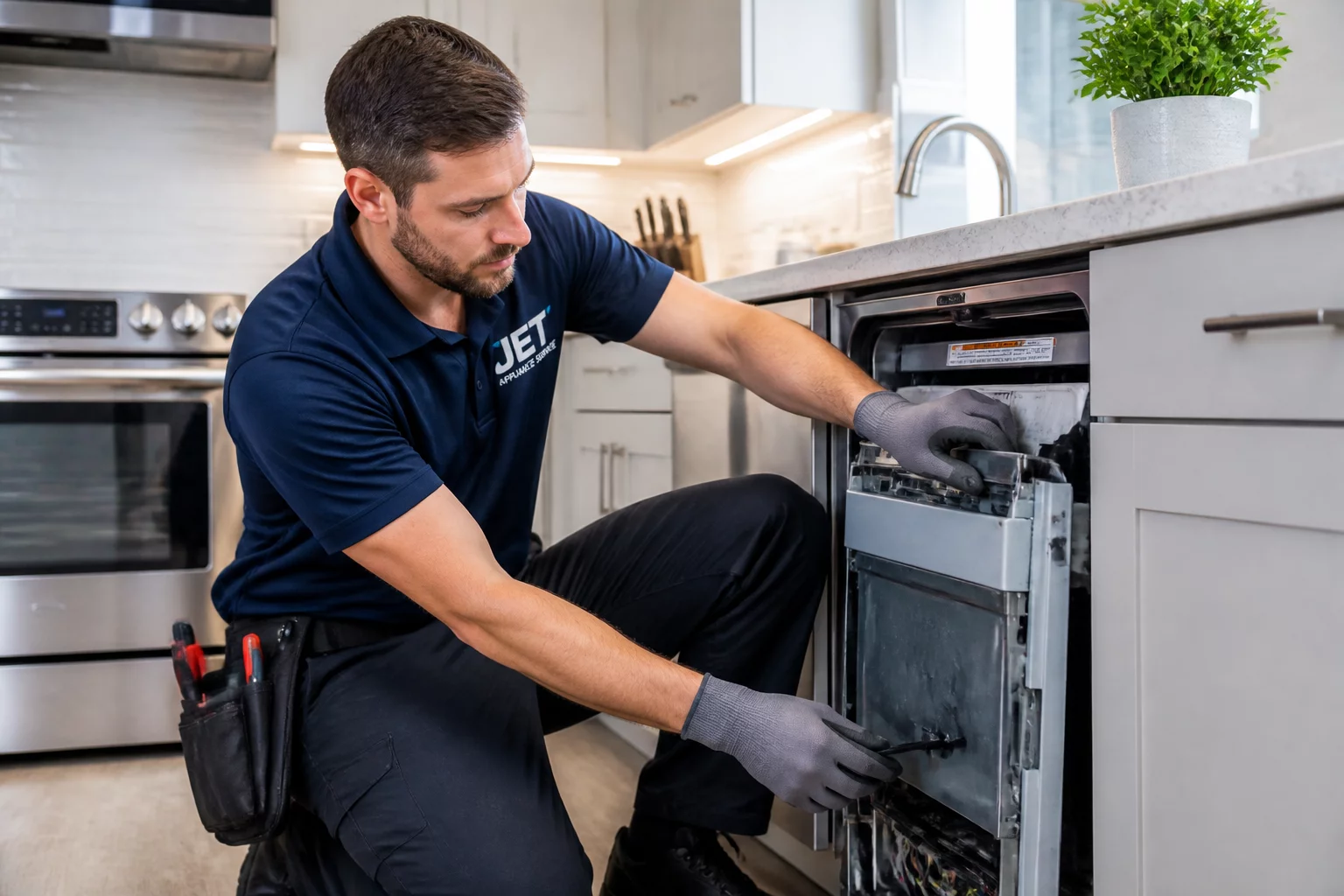
Repairing a built-in dishwasher in a modern kitchen

Comprehensive Dishwasher Diagnostics & Solutions

A broken dishwasher disrupts the smooth flow of any modern household. Modern dishwashing units combine complex electronic controls, high-pressure water delivery, and heating systems. Our qualified technicians in Ajman arrive prepared with specialized diagnostic instruments to identify electrical errors, pump failures, valve defects, or plumbing clogs directly at your location.

Key Diagnostic Note

If your dishwasher halts mid-cycle or displays an error code, avoid repeatedly resetting the main breaker. Continuous operation under electrical fault or drain blockage can damage the circulation pump motor and electronic control board.

Specialized Repairs We Perform

We service all major dishwasher models, including integrated under-counter, compact, and freestanding units. Each repair task is executed using factory-approved specifications to preserve machine efficiency and longevity.

Drain Pump & Motor Replacement

Thorough clearing of trapped debris, replacement of worn impellers, and complete motor renewal for efficient water removal without loud noises.

Heating Element & Sensor Service

Restoration of heating coils, thermostat calibration, and NTC temperature sensor replacement to eliminate cloudy dishes and cold wash cycles.

Step-by-Step Inspection Checklist

  • Inspection of inlet water solenoid valve, mesh filters, and water pressure regulator lines.
  • Testing of door gasket seals, float switch sensors, and bottom pan leak detection mechanisms.
  • Diagnostic scan of the electronic control unit for burned relay switches and firmware communication errors.

Frequently Asked Questions

Customer Experiences & Discussion

0 Comments

No comments yet. Be the first to share your experience or ask a question!

Leave a Comment

Share your feedback, appliance model observations, or questions with our technical team.

Service guide

What to Expect During Dishwasher Repair

Symptoms to report

Tell us whether the dishwasher fails to start, leaves water behind, leaks, leaves residue, fails to heat, or stops mid-cycle. Mention any display code and whether the issue is intermittent.

Check user-serviceable items

Review the manual for filter cleaning, spray-arm inspection, door-latch checks, and detergent recommendations. Switch off the appliance before handling removable parts.

Diagnostic areas

Depending on the reported fault, inspection may include the inlet valve, drain pump, circulation pump, heater, sensors, door latch, seals, or electronic controls.

Confirm completion

After repair, ask what was found, what was changed, and whether a test cycle was run. Follow the manual's loading and maintenance guidance to help maintain performance.

Detailed repair information

Comprehensive Dishwasher Repair Guide

Dishwasher performance depends on water temperature, detergent, spray-arm movement, filtration, drainage and correct loading. Cloudy glasses or dirty plates can be caused by user settings and blocked spray jets as well as mechanical faults, so diagnosis should cover the complete wash process.

Dishes come out dirty or coated with residue

Avoid nesting bowls and placing large trays where they block spray arms. Use dishwasher detergent intended for the appliance and check that the dispenser can open freely. If the problem persists, clogged spray-arm jets, a dirty filter, weak circulation, poor water heating or a dosing issue may need attention.

Water remains at the bottom after a cycle

A small amount of water may be normal on some designs, but standing dirty water can indicate a blocked filter, obstructed drain hose, drain-pump problem or a household plumbing issue. Turn the appliance off before cleaning any user-accessible filter and expect some water to spill. Do not remove panels or handle wiring.

The dishwasher leaks or will not fill

Inspect visible supply and drain connections for dampness, without pulling a built-in unit out unsafely. Door gasket damage, an incorrectly loaded item, inlet valve issues or an overflow-related fault may be involved. Stop the cycle if water is reaching electrical connections or spreading across the floor.

The dishwasher is noisy or the cycle stops early

Rattling can come from loose dishes or utensils touching a spray arm. Persistent grinding, buzzing or repeated pauses may point to a circulation pump, drain pump, water-level sensor, door latch or control issue. Note the stage of the cycle and any flashing lights to help diagnosis.

How diagnosis and repair should work

A repair assessment should establish whether the appliance fills, heats, circulates, drains and completes its programme. The technician may check filters and spray arms, inspect hoses and seals, test pumps and valves, and evaluate heating and control functions. Once work is approved and completed, a test cycle helps verify water circulation, drainage and leak-free operation.

Maintenance that may prevent repeat problems

Scrape food scraps from dishes without pre-rinsing more than the detergent system requires, clean the filter regularly, and check spray arms for blocked holes. Use rinse aid and dishwasher salt only where the model and local water conditions call for them. Keep the door seal clean and avoid placing tall items where they prevent the detergent dispenser from opening.

Frequently asked questions

These answers are general guidance. Appliance designs vary, so always follow the manufacturer's manual and use a qualified technician for hazardous or internal repairs.

Is water at the bottom always a fault?

Not necessarily; some models retain a small amount in a designated sump. Standing dirty water or water that rises unexpectedly should be investigated.

Why are glasses cloudy?

Mineral deposits, detergent dosage, rinse-aid settings, water hardness and wash temperature can contribute. Check the manual before assuming a component has failed.

Can I run another cycle when the dishwasher leaks?

No. Stop the programme and isolate power only if you can do so safely. Continued use can cause water damage and electrical hazards.

Safety comes first

Stop using an appliance if you notice smoke, a burning smell, exposed wiring, repeated electrical tripping, a gas smell, a damaged microwave door or water near electrical components. Do not bypass safety devices or open sealed/high-voltage systems. Isolate power or water only when it is safe to do so and contact an appropriately qualified service professional.