
Appliance Technical Guide

Reliable Freezer Repair and Cooling System Maintenance

Complete diagnostics and repair solutions for residential and commercial chest freezers, upright units, and dual-zone cooling systems across Ajman.

August 14, 2026
Author: Michael T.
5 min read
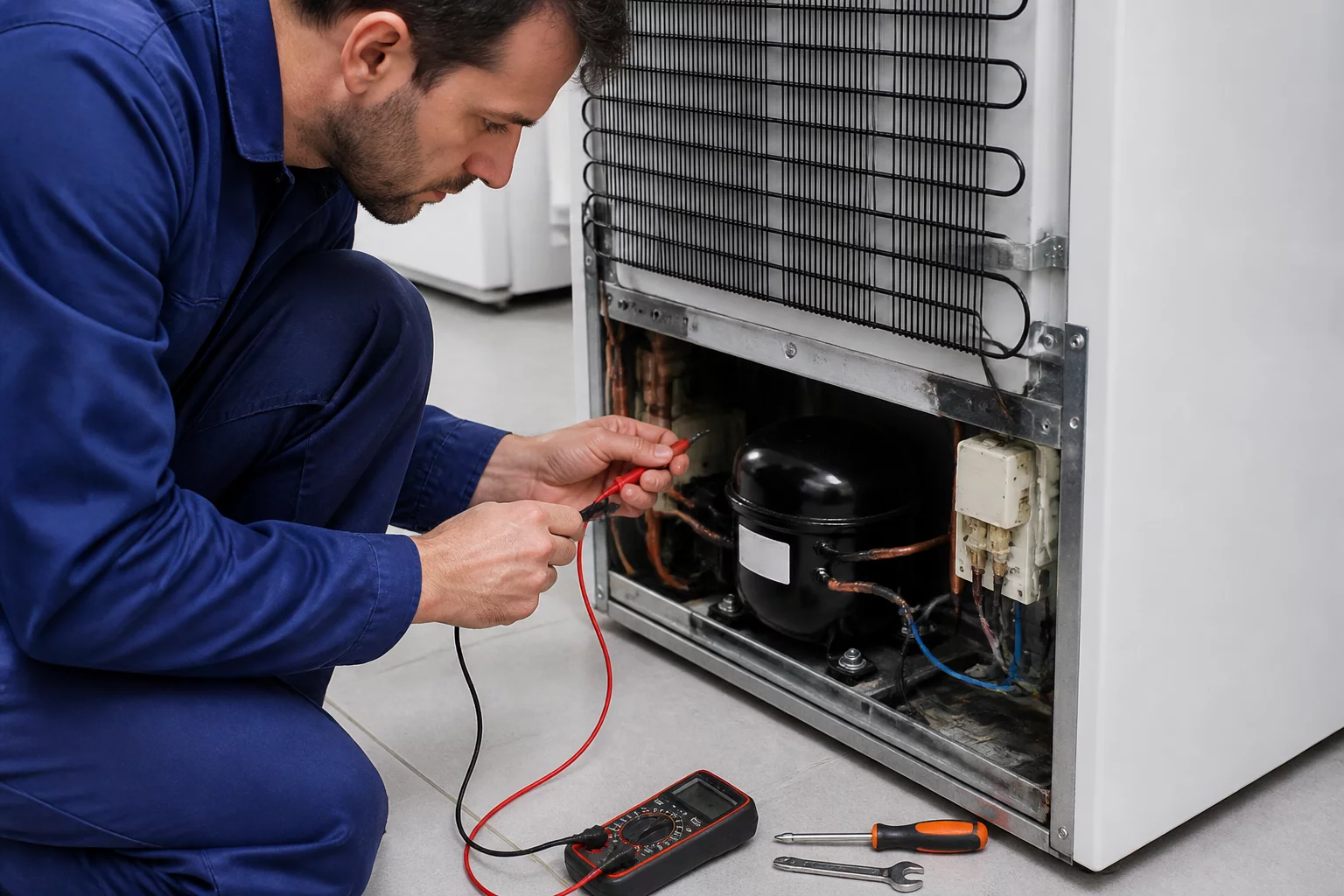
Fixing a chest freezer in a utility room.

Comprehensive Freezer Diagnostics and Core Breakdown Causes

When a domestic or commercial freezer begins warming up or accumulating thick sheets of frost, rapid intervention prevents food spoilage and permanent compressor burnout. Freezers operate under constant thermal load, relying on balanced refrigerant flow, airtight magnetic door seals, calibrated thermostat sensors, and unrestricted condenser heat dissipation. Over time, heavy usage or ambient temperature spikes common in the region put immense pressure on electrical and cooling circuits. Our diagnostic procedure pinpoints whether the underlying fault stems from a seized start relay, a blocked capillary tube, a depleted refrigerant charge, or an evaporative fan malfunction.

Key Diagnostic Note

If your freezer clicks repeatedly every few minutes without starting the cooling cycle, shut off the power immediately. This clicking sound indicates that the compressor thermal overload protector is tripping due to high start resistance, which can permanently ruin the motor if left powered on.

Key Components Restored During Professional Service

Our mobile repair units arrive equipped with genuine OEM replacement parts for leading freezer brands. Rather than resorting to temporary fixes, our technicians restore the factory thermodynamic equilibrium of your unit. Every repair addresses both the visible symptom and the root strain on the motor.

Defrost System Calibration

Thorough testing and replacement of faulty defrost heaters, bimetal thermostats, and defrost timers to eliminate internal coil freeze-overs.

Sealed System & Relay Service

Precision leak detection, filter-drier replacement, compressor relay installation, and exact manufacturer-spec refrigerant charging.

Step-by-Step Inspection Checklist

  • Check the door perimeter gasket using a sheet of paper to ensure a tight magnetic vacuum seal around the entire frame.
  • Inspect rear condenser coils for heavy lint or dust accumulation and clear all airflow obstructions around the cabinet.
  • Verify that internal air circulation vents remain completely unblocked by frozen food packages inside the compartments.

Frequently Asked Questions

Customer Experiences & Discussion

0 Comments

No comments yet. Be the first to leave a comment.

Leave a Comment

Share your feedback, appliance model observations, or questions with our technical team.

Service guide

Protecting Food When a Freezer Develops a Fault

Record temperature and symptoms

Note the displayed or measured temperature, whether the compressor runs continuously, whether frost is building up, and whether the door seals close fully.

Limit heat entering the cabinet

Keep the door closed as much as practical while arranging help. Move food to a safe alternative if the freezer cannot maintain a safe temperature, and follow local food-safety advice.

Possible technical causes

Diagnosis may involve the door gasket, evaporator fan, defrost system, thermostat, control board, compressor, or sealed cooling circuit. The model and test results determine the appropriate repair.

Avoid refrigerant handling

Do not puncture cooling lines or attempt a DIY refrigerant recharge. Sealed-system work should be performed by an appropriately qualified technician using suitable equipment.

Detailed repair information

Freezer Repair and Food-Storage Protection

A freezer must maintain a consistently low temperature to preserve food quality and safety. Problems may involve door sealing, airflow, frost management, temperature sensing, starting components or the sealed cooling system. The symptom pattern and temperature history help distinguish an installation or usage issue from a component failure.

The freezer is running but food is softening

Check the thermostat setting, door closure, loading and ventilation clearances. Newly loaded warm food or frequent door openings can temporarily increase temperature, but persistent warming or a compressor that runs without restoring temperature requires inspection. Keep the door closed as much as possible while arranging service.

Heavy frost or ice forms inside

A door gasket that does not seal, a lid left slightly open, damaged hinges or a defrost fault can allow moisture to accumulate. Check that packages do not prevent the door from closing. Do not chip ice with a knife or sharp tool, and follow the manual for any approved defrost procedure.

The freezer clicks, buzzes or stops unexpectedly

Repeated start attempts, fan noise, vibration or abrupt shutdown can be associated with a start device, fan, compressor, sensor or control problem. Record whether the interior is still cold and whether the sound repeats at regular intervals. Electrical tests and compressor diagnosis should be performed by a technician.

Water appears around the freezer

Water can result from defrosting, a blocked drain, a door seal issue or a nearby plumbing connection on models with ice-making features. Protect the floor and avoid contact between water and electrical outlets. If the source is unclear or water continues to spread, stop using the appliance and seek service.

How diagnosis and repair should work

A professional assessment can include measuring cabinet temperature, inspecting seals and airflow, reviewing frost patterns, checking fans and controls, and testing the start and defrost systems. If the evidence suggests a sealed-system problem, additional specialist tests may be needed. Ask for the diagnosis and repair estimate before authorising parts, particularly where compressor or refrigerant work is proposed.

Maintenance that may prevent repeat problems

Check the gasket and lid alignment regularly, avoid packing items against air outlets, and clean accessible vents as recommended. Label and rotate stored food, and avoid leaving the lid open while sorting groceries. A separate appliance thermometer can help identify a temperature drift early.

Frequently asked questions

These answers are general guidance. Appliance designs vary, so always follow the manufacturer's manual and use a qualified technician for hazardous or internal repairs.

How long will food stay frozen during a fault?

It depends on the freezer, how full it is, the room temperature and how often the door is opened. Keep the door closed and follow local food-safety guidance rather than relying on a fixed time estimate.

Can I scrape away built-up ice?

Never use sharp tools or force. You may puncture a liner or cooling line. Use only the defrost method specified in the manual.

Does frost mean the refrigerant is low?

No. Frost patterns can reflect door sealing, airflow or defrost issues. A proper diagnosis is needed before deciding whether sealed-system work is relevant.

Safety comes first

Stop using an appliance if you notice smoke, a burning smell, exposed wiring, repeated electrical tripping, a gas smell, a damaged microwave door or water near electrical components. Do not bypass safety devices or open sealed/high-voltage systems. Isolate power or water only when it is safe to do so and contact an appropriately qualified service professional.