Appliance Technical Guide

Professional Fridge Repair & Cooling Diagnostics in Ajman

Reliable diagnostics, component repairs, and precision refrigerant management for domestic refrigerators, freezers, and multi-door cooling appliances across Ajman.

August 29, 2026
Author: Tariq Mansoor
5 min read
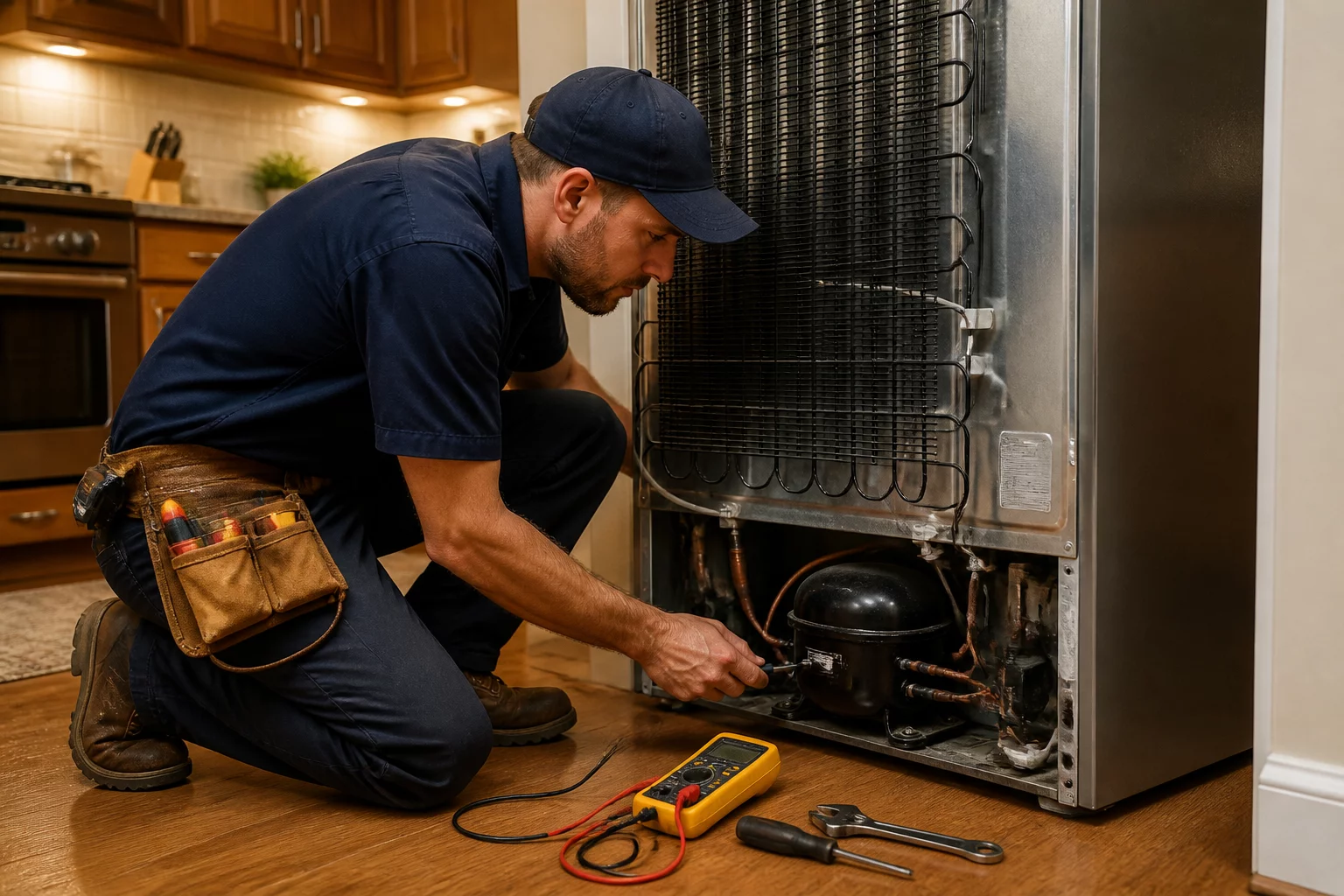
Technician checking the compressor of a large refrigerator

Comprehensive Refrigerator Troubleshooting & Maintenance

A malfunctioning refrigerator disrupts everyday kitchen operations and threatens food preservation within a few short hours. Modern refrigeration units rely on a balanced thermodynamic loop containing refrigerant gas, sealed compressors, evaporator coils, and precision digital sensors. When any single element loses calibration or suffers wear, cooling efficiency drops rapidly. Our technicians inspect the complete thermal loop to detect underlying issues accurately and restore factory performance.

Key Diagnostic Note

Before requesting emergency compressor service, inspect the condenser coils located at the back or underneath the cabinet. Heavy dust accumulation restricts heat dissipation, forcing the compressor to overheat and trip the thermal overload protector repeatedly.

Common Fridge Breakdowns We Resolve Daily

Household refrigerators operate non-stop throughout the year under demanding ambient conditions. Continuous cycles place stress on mechanical seals, evaporator fans, and electronic controller boards. Addressing minor temperature shifts early protects expensive components from irreversible damage.

Cooling Loss & Gas Refill

Locating micro-leaks in copper piping, vacuum testing lines, and recharging precision R134a or R600a eco-friendly refrigerants.

Compressor & Relay Repairs

Diagnosing locked rotors, faulty PTC start relays, defective overload switches, and executing quiet inverter compressor replacements.

Step-by-Step Inspection Checklist

  • Examine door magnetic gaskets for tears, stiffness, or air gaps using a simple paper slip resistance test.
  • Verify that the evaporator fan inside the freezer compartment rotates smoothly without grinding noises or ice obstruction.
  • Check the drain hole and defrost heater circuit to ensure condensate clears freely without pooling beneath vegetable crispers.

Frequently Asked Questions

Customer Experiences & Discussion

0 Comments

No comments yet. Be the first to share your experience or ask a question.

Leave a Comment

Share your feedback, appliance model observations, or questions with our technical team.

Service guide

Refrigerator Repair: Diagnosis Before Parts

Share the operating pattern

Tell us whether the fridge is warm, the freezer still works, the motor runs constantly, the unit leaks, or the temperature changes after door opening. Mention any recent move or power interruption.

Simple checks

Confirm the temperature settings, door closure, and unobstructed user-accessible ventilation areas according to the manual. Avoid pulling a built-in unit out without help or damaging the water line.

Potential repair areas

Depending on testing, the cause may relate to a fan, defrost heater, sensor, door seal, control board, compressor, or sealed cooling system. Similar symptoms can have different causes.

Protect stored food

Keep doors closed as much as possible and move perishable items if safe temperatures cannot be maintained. Do not rely only on whether food still feels cold.

Detailed repair information

Refrigerator Repair: Symptoms, Diagnosis and Care

A refrigerator maintains safe food storage through a sealed cooling circuit, evaporator and condenser airflow, fans, sensors, door seals and a defrost system. A warm compartment may be caused by a simple airflow obstruction or door-seal issue, but it can also indicate a technical fault that needs professional testing.

The refrigerator is not cooling properly

Check the temperature setting, door closure and whether food packages block internal air vents. Avoid placing hot food directly inside and make sure the appliance has the clearance required by its manual. If temperatures continue rising, the compressor runs constantly or cooling changes sharply, arrange an inspection rather than adjusting settings repeatedly.

Water collects under drawers or on the floor

A blocked defrost drain, damaged water line, misaligned door seal or overflowing drip tray may be responsible, depending on the model. Record where the water appears and whether it follows a defrost cycle or ice-maker use. Do not use sharp objects to clear an internal drain because tubing and liners can be damaged.

The refrigerator clicks, buzzes or runs continuously

Some compressor and fan sounds are normal, but repeated clicking with no cooling, grinding from a fan or a motor that runs almost continuously deserves attention. Check that the appliance is level and not touching cabinetry. Internal electrical diagnosis and sealed-system repairs should be carried out by trained personnel.

Frost builds up or the freezer is too warm

Excessive frost can result from a door left ajar, a damaged gasket, frequent long openings or a defrost-system fault. Check that the gasket contacts the cabinet evenly and that drawers close fully. If frost quickly returns after safe defrosting, the heater, sensor, fan or control system may require inspection.

How diagnosis and repair should work

A good refrigerator diagnosis uses temperature readings from both compartments, the pattern of compressor and fan operation, visible frost distribution and the location of any water. Depending on findings, a technician may test door switches, fans, sensors, defrost components, start devices and control electronics. Refrigerant handling and sealed-system work require appropriate equipment and should not be attempted as a household repair.

Maintenance that may prevent repeat problems

Keep door seals clean, avoid overpacking air vents, allow hot food to cool appropriately before storage, and clean accessible condenser areas only if the manual permits it and power is disconnected safely. Set temperatures according to manufacturer guidance and check them with a suitable thermometer if food safety is in doubt. Minimise door opening during a suspected cooling failure.

Frequently asked questions

These answers are general guidance. Appliance designs vary, so always follow the manufacturer's manual and use a qualified technician for hazardous or internal repairs.

Should I add refrigerant if the fridge is warm?

Do not attempt this yourself. Low refrigerant is not the only possible cause, and refrigerant work requires leak diagnosis, proper tools and qualified handling.

How can I protect food during a cooling problem?

Keep doors closed, monitor temperatures where possible and move perishable food to a safely cold alternative if the refrigerator cannot maintain a safe temperature. Follow local food-safety guidance.

Is a warm side panel always a problem?

Some heat at the sides or rear can be normal as the appliance releases heat. Sudden changes combined with poor cooling, unusual noise or burning odour warrant assessment.

Safety comes first

Stop using an appliance if you notice smoke, a burning smell, exposed wiring, repeated electrical tripping, a gas smell, a damaged microwave door or water near electrical components. Do not bypass safety devices or open sealed/high-voltage systems. Isolate power or water only when it is safe to do so and contact an appropriately qualified service professional.