Appliance Technical Guide

Professional Built-in & Electric Oven Repair in Ajman

Reliable diagnostics, prompt heating element replacement, thermostat calibration, and electronic board repairs for all major residential oven models.

August 24, 2026
Author: Master Technician Tariq
6 min read
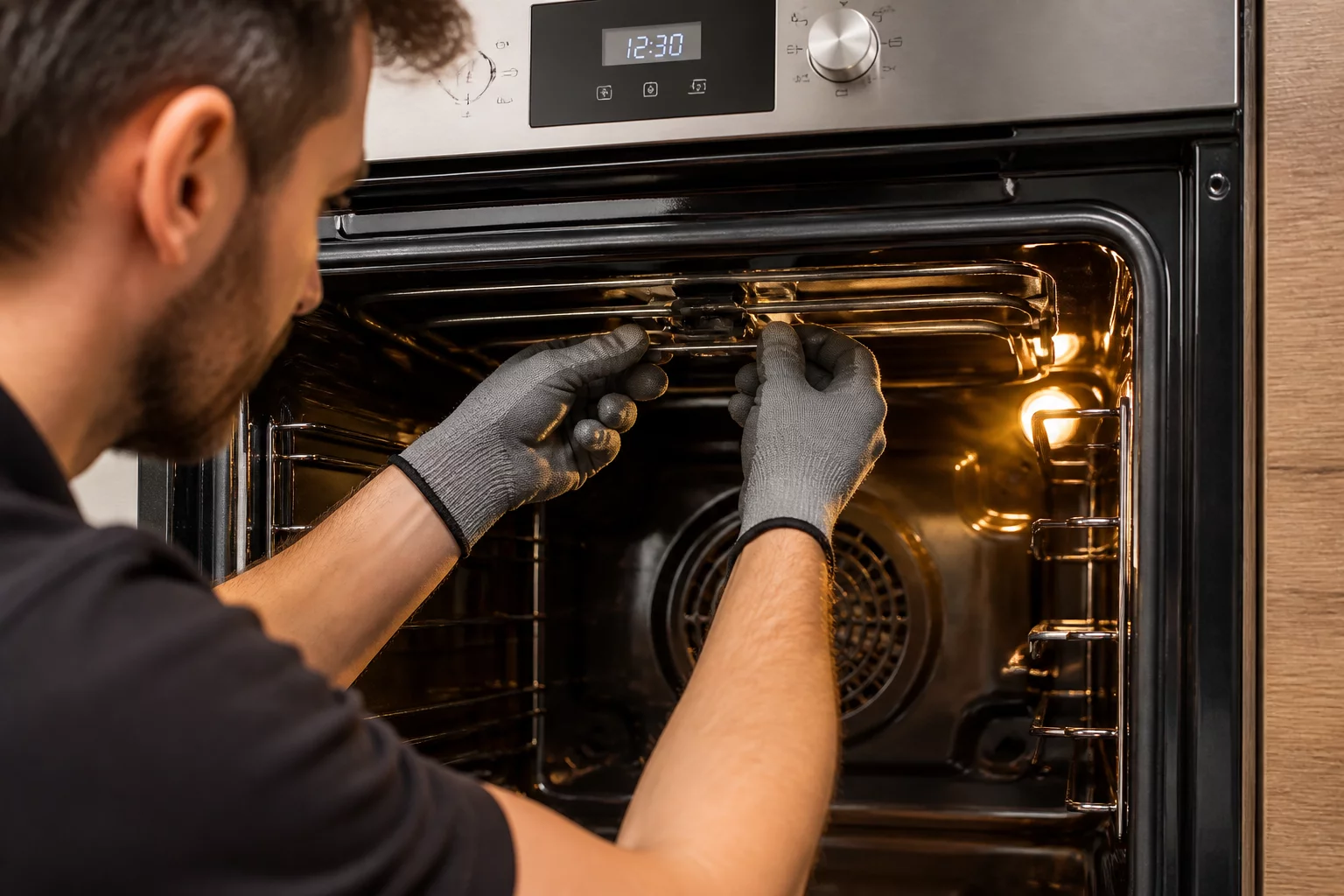
Repairing an electric built-in oven in a kitchen

Comprehensive Oven Diagnostics and Restorative Solutions

Electric and built-in ovens operate through a balanced network of high-resistance heating elements, thermal safety limiters, convection blowers, and precision control thermostats. Over years of culinary use, extreme temperature cycles can cause heating coils to burn out, electronic relays to stick, or door hinges to sag. Our certified technicians in Ajman arrive equipped with dedicated diagnostic instruments to test resistance, isolate electrical faults, and restore proper baking performance without unnecessary delays.

Key Diagnostic Note

If your oven trips the home circuit breaker immediately after turning on the baking mode, the lower heating element has most likely suffered an internal ground fault. Avoid repeatedly turning the breaker on to prevent damaging the main electronic control module.

Common Oven Failures We Resolve On-Site

Whether your oven produces uneven heat that ruins delicate pastries, generates error codes on the digital interface, or refuses to heat up entirely, our technical team maintains an inventory of OEM replacement elements, thermal fuses, and selector switches ready for same-day repair across Ajman neighborhoods.

Coil & Thermostat Repair

Calibrating temperature sensors and replacing burned bake or broil elements to restore accurate and stable heat levels.

Door Gasket & Hinge Alignment

Replacing worn silicone heat seals and adjusting heavy spring hinges to prevent hot air leakage and reduce energy waste.

Step-by-Step Inspection Checklist

  • Check the bake and broil elements for physical warping, cracks, blisters, or continuity loss.
  • Verify that the convection fan rotates freely and that thermal safety cutoffs are not open-circuited.
  • Inspect digital control board relays, rotary selector switches, and wiring harnesses for heat degradation.

Frequently Asked Questions

Customer Experiences & Discussion

0 Comments

No comments yet. Be the first to share your experience or ask a technical question!

Leave a Comment

Share your feedback, appliance model observations, or questions with our technical team.

Service guide

Oven Faults and Safe Preparation

Describe heating behaviour

Note whether the oven fails to heat, takes too long, overheats, cooks unevenly, or displays a code. Mention whether the fault affects all modes or only a particular setting.

Use safe checks only

Confirm the selected mode and timer settings and consult the manual. Do not remove covers or touch heating elements, wiring, or internal components while the appliance is connected.

Possible diagnostic areas

Depending on the design, inspection may include the element, thermostat, temperature sensor, fan, door seal, selector switch, wiring, or control board.

Stop if there is smoke or electrical damage

Turn the appliance off if safe and do not continue cooking if there is sparking, a burning smell, damaged glass, or repeated power trips.

Detailed repair information

Oven Repair, Temperature Accuracy and Safe Use

An oven relies on heating elements or a burner system, temperature sensing, controls, insulation, door hinges and seals to heat food consistently. Uneven cooking can be caused by rack position or cookware as well as a technical fault, so the oven's behaviour across different settings is important evidence.

The oven does not heat or takes too long

Confirm the correct function and temperature are selected and allow for the preheat period described in the manual. If the oven remains cold, possible causes include a heating element, ignition system, temperature sensor, supply issue or control fault. Avoid removing covers or testing live electrical parts.

Food burns on one side or cooks unevenly

Check rack placement, cookware size and whether the selected mode uses a fan. A damaged fan, inaccurate temperature sensor, failing element or door seal can create uneven heat. If the difference is persistent across recipes and rack positions, a technician can check temperature regulation and heating performance.

The door does not close or heat escapes

Inspect the visible gasket for tears, hardened areas or food debris and check whether the door appears misaligned. Damaged hinges, latch components or a worn seal can waste energy and affect cooking. Do not force a door that is stuck or attempt hinge disassembly without the correct procedure.

The oven trips power, sparks or smells unusual

Stop using the oven if it sparks, produces smoke, repeatedly trips a breaker or smells of burning electrical insulation. Switch it off and isolate power only if safe. These signs require professional assessment; do not repeatedly reset the breaker or continue cooking to see whether the fault clears.

How diagnosis and repair should work

A technician should identify the oven type, model, selected mode and exact symptom before inspecting the relevant heating, sensing, fan, door or control systems. Work may involve electrical safety checks, element and sensor tests, seal inspection and verification of temperature regulation. The appliance should be tested after repair, and any remaining limitations should be explained before handover.

Maintenance that may prevent repeat problems

Clean spills when the oven is cool, use the approved cleaning method for the surface and avoid damaging the gasket with abrasive tools. Keep ventilation openings clear and do not line the oven floor with material unless the manufacturer explicitly permits it. Use oven-safe cookware and follow the manual for self-cleaning functions.

Frequently asked questions

These answers are general guidance. Appliance designs vary, so always follow the manufacturer's manual and use a qualified technician for hazardous or internal repairs.

Can I replace an oven element myself?

Only if the manufacturer provides a safe user-replaceable procedure and you are competent to follow it. In many models, access involves hazardous electrical connections; professional service is the safer choice.

Why is the oven temperature different from the display?

Preheat cycling, sensor position, calibration and the selected mode can affect readings. A persistent large difference should be measured and diagnosed rather than corrected by guesswork.

Can I use an oven with a damaged door seal?

It is better to arrange repair because heat loss can affect performance and create hot surfaces. Stop use if the door is unstable or cannot close securely.

Safety comes first

Stop using an appliance if you notice smoke, a burning smell, exposed wiring, repeated electrical tripping, a gas smell, a damaged microwave door or water near electrical components. Do not bypass safety devices or open sealed/high-voltage systems. Isolate power or water only when it is safe to do so and contact an appropriately qualified service professional.