Technical Service & Repairs

Electric Stove and Cooktop Repair in Ajman

Professional diagnostics, burner element replacement, switch restoration, and electrical safety testing for ceramic and coil electric stoves across Ajman.

August 29, 2026
Author: Master Technician Tariq
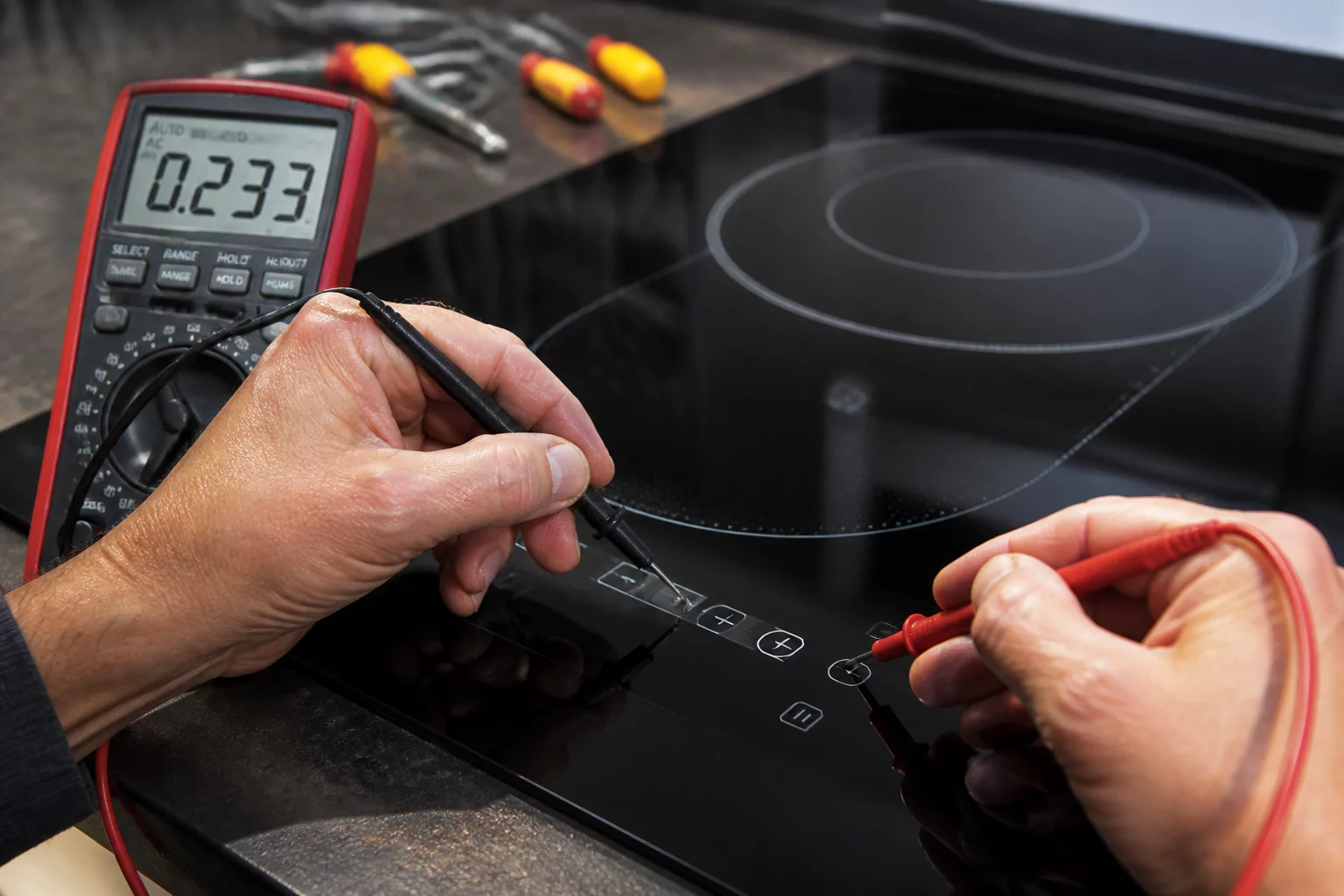
Fixing the burners on a ceramic electric stove

Comprehensive Electric Stove Diagnostics & Fault Finding

Electric stoves, whether modern glass-ceramic induction models or classic solid-plate cooking ranges, operate under significant electrical current and intense heat cycles. Over time, terminal connections oxidize, heating elements burn through, and infinite control switches lose contact tension. Our technicians evaluate the electrical load balance, check for micro-cracks in radiant heating ribbons, and inspect thermal limiters directly on site in Ajman.

Key Diagnostic Note

Never operate an electric stove if a burner trips your household circuit breaker repeatedly or if you smell burnt wiring insulation behind the knobs. Such symptoms indicate severe terminal overheating or an internal ground fault that requires instant disconnection and professional bench testing.

Precision Element Replacement & Control Board Restoration

When radiant heating zones heat unevenly or stay trapped on maximum power, the culprit is usually a melted switch contact or a defective relay on the electronic power board. We stock genuine OEM replacement coils, high-temp silicone wiring harnesses, and digital control modules for all leading kitchen appliance brands. Every repair includes complete post-installation resistance verification and temperature regulation tests.

Burner & Radiant Coil Service

Rapid diagnosis and replacement of faulty heating coils, dual-zone expanders, and ceramic glass surface heating ribbons.

Switch & Thermostat Calibration

Restoring accurate heat modulation by swapping sticky infinite switches, touch control pads, and overheat protection sensors.

Step-by-Step Inspection Checklist

  • Input Voltage & Junction Block: Testing supply voltage and verifying that terminal screw blocks show no heat pitting or loose contact points.
  • Ohmic Resistance Analysis: Measuring continuous element resistance across each burner zone to pinpoint open circuits and wire fatigue.
  • Residual Heat Indicator Verification: Testing thermal limit sensors to ensure surface warning lights ignite and extinguish correctly for safety.

Frequently Asked Questions

Customer Experiences & Discussion

0 Comments

No comments yet. Be the first to share your experience with electric stove repair.

Leave a Comment

Share your feedback, appliance model observations, or questions with our technical team.

Service guide

Electric Stove Troubleshooting and Safety

Identify the affected zone

Note whether one burner, several burners, the oven, or the entire cooktop has stopped working. Record indicator lights, error messages, and whether a circuit breaker has tripped.

Basic checks only

If there are no signs of damage, consult the manual for lock controls and compatible cookware requirements, particularly on induction models. Do not remove the cooktop or touch internal wiring.

Potential repair areas

Depending on the design, diagnosis may include a radiant element, induction module, control switch, temperature sensor, terminal connection, or electronic control board.

When to stop using it

Stop using the appliance if the glass is cracked, a control sparks, a burning smell occurs, or the unit repeatedly trips power. Do not place cookware on a visibly damaged surface.

Detailed repair information

Electric Stove and Cooktop Repair Guide

Electric cooktops use radiant elements, coils, induction electronics or combined control systems. A zone that heats slowly, stays hot after switching off or behaves unpredictably should be assessed carefully because both electrical safety and residual heat are important.

One burner does not heat

Check that the correct control is selected and, for induction models, that the cookware is compatible and centred. If one zone remains inactive while others work, a local element, sensor, switch or control module may be involved. Do not lift the cooktop or access terminals while it is connected to power.

The heat level fluctuates or will not adjust

Some cycling is normal for radiant elements, but extreme fluctuations, a control that ignores settings or a zone that stays at high heat can indicate a switch, sensor or electronic-control issue. Stop using the affected zone if it cannot be controlled reliably.

The surface is cracked or shows burn marks

A cracked glass surface can allow liquid to reach electrical components and should not be used until assessed and repaired. Avoid placing weight on damaged glass. Burn marks, melted controls or a hot electrical smell are reasons to isolate the appliance if safe and seek service.

The cooktop displays an error or switches off

Record the error code and the conditions under which it appears. Some codes relate to cookware detection, overheating, supply voltage or internal sensors. Let the appliance cool only if the manual recommends it; repeated resets should not replace diagnosis.

How diagnosis and repair should work

The repair process should identify the cooktop technology and affected zone before testing. Depending on design, inspection may include the element, switch, temperature limiter, sensor, induction coil, cooling fan, wiring and control board. After any repair, the technician should verify the zone responds to its controls and that the appliance operates without abnormal heating or electrical symptoms.

Maintenance that may prevent repeat problems

Use cookware suitable for the surface, lift pans rather than dragging them, clean spills after the cooktop cools and follow the manufacturer's cleaning instructions. Keep ventilation openings clear on induction models and do not place metal objects on zones that may activate unexpectedly. Treat the surface as hot until the residual-heat indicator confirms otherwise.

Frequently asked questions

These answers are general guidance. Appliance designs vary, so always follow the manufacturer's manual and use a qualified technician for hazardous or internal repairs.

Can I use a cooktop with cracked glass?

No. Stop using it and arrange assessment because liquid can reach electrical parts and the glass may fail further.

Why does an induction stove not recognise my pan?

The cookware may not be induction-compatible, may be too small for the zone or may be poorly centred. Check the manual before assuming a component has failed.

Why does a radiant burner cycle on and off?

Temperature regulation can cycle normally. If heating is uncontrolled or the setting has no effect, stop using the affected zone and arrange service.

Safety comes first

Stop using an appliance if you notice smoke, a burning smell, exposed wiring, repeated electrical tripping, a gas smell, a damaged microwave door or water near electrical components. Do not bypass safety devices or open sealed/high-voltage systems. Isolate power or water only when it is safe to do so and contact an appropriately qualified service professional.