Appliance Technical Guide

Microwave Oven Repair & Diagnostics in Ajman

Reliable on-site solutions for heating failures, sparking cavities, unresponsive touch controls, and faulty door safety interlocks across Ajman homes.

August 24, 2026
Author: Tariq Mansoor
5 min read
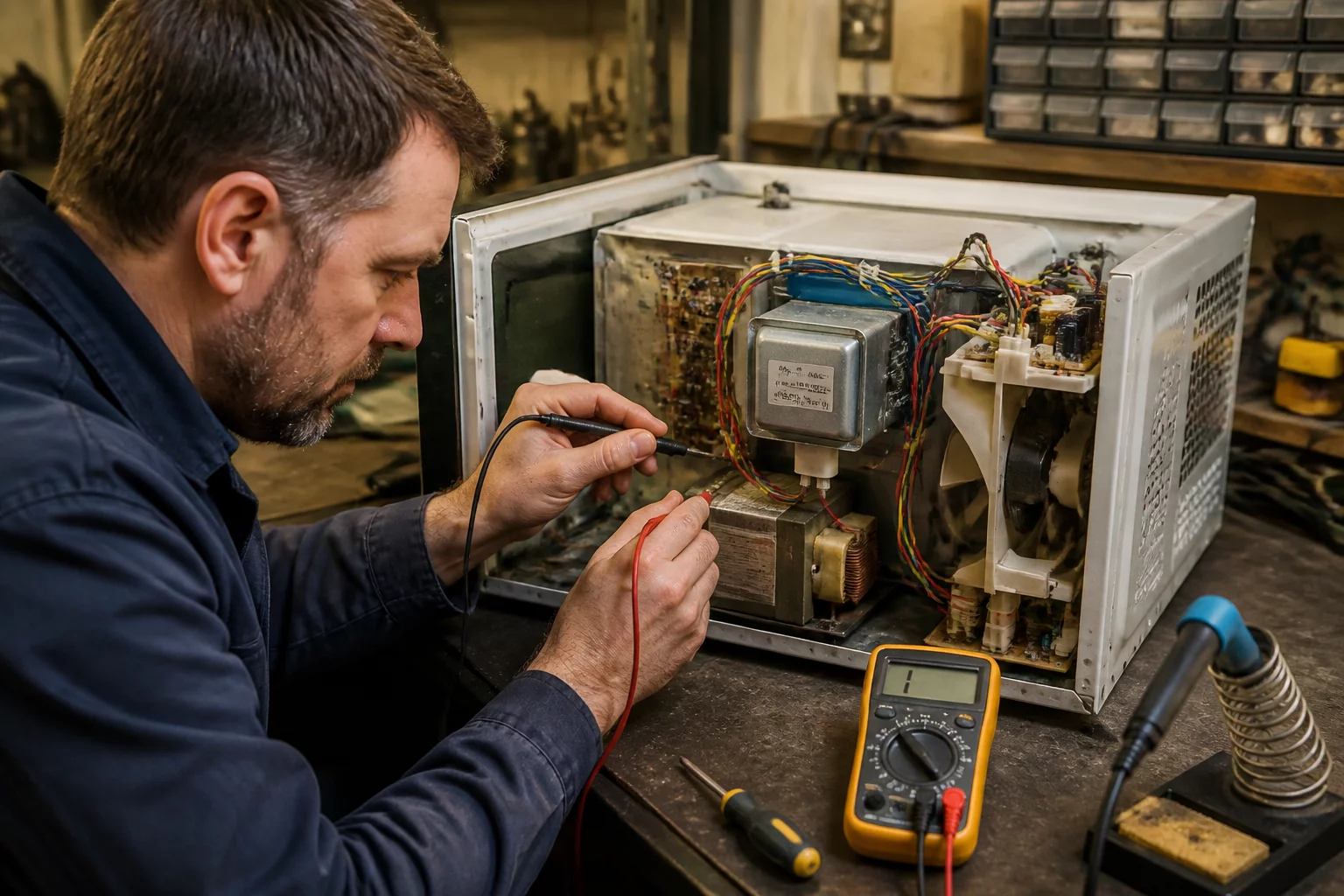
Technician opening the casing of a microwave oven for repair.

Common Microwave Failures We Solve in Ajman

Microwave ovens operate under intense thermal cycles and heavy high-voltage demands. When your appliance suddenly refuses to heat food, produces sparks inside the chamber, or makes an abnormal buzzing vibration, continued operation becomes unsafe. Our certified repair technicians carry out comprehensive component-level testing across all major residential models, replacing defective magnetrons, high-voltage diodes, blown thermal fuses, and worn turntable motors directly on-site in Ajman.

Key Diagnostic Note

Never attempt to dismantle the protective outer casing of a microwave oven without specialized insulation equipment. The high-voltage capacitor retains lethal electrical charges for extensive periods even after the power cord is disconnected from the electrical outlet.

Comprehensive Diagnostic & Component Replacement Process

Our troubleshooting protocol examines both electrical safety and operational efficiency. We measure line voltage supply, assess the responsiveness of the three primary door interlock micro-switches, evaluate the cooling fan motor, and inspect control board ribbon connectors to ensure precise timer and power cycle regulation during every cooking task.

Original Magnetrons & Diodes

We supply authentic manufacturer-grade heating tubes, high-voltage rectifiers, and thermal limiters engineered for stable cooking frequencies.

Radiation Leakage & Ground Testing

Every repaired appliance undergoes strict electromagnetic emission screening with calibrated testing meters prior to kitchen reinstallation.

Step-by-Step Inspection Checklist

  • Verify door latch alignment and measure continuity across primary, secondary, and monitor door interlock switches.
  • Inspect the mica waveguide cover inside the cavity for carbon deposits, burnt scorch marks, or moisture saturation.
  • Examine the turntable synchronous motor and guide ring underneath the rotating glass plate for mechanical binding.

Frequently Asked Questions

Customer Experiences & Discussion

0 Comments

No comments yet. Be the first to leave a comment.

Leave a Comment

Share your feedback, appliance model observations, or questions with our technical team.

Service guide

Microwave Safety and Repair Planning

Common warning signs

A microwave may run without heating, spark inside, make unusual noises, fail to start, or show an error. Note when the issue occurs and whether the door closes correctly.

Do not open the cabinet

Microwave ovens can contain high-voltage components that may retain a dangerous charge even after unplugging. Do not remove the outer casing or attempt internal capacitor, magnetron, or interlock repairs yourself.

Inspection and testing

A qualified technician may check door interlocks, the power supply, control circuitry, thermal protection, and heating components according to the model and reported symptoms.

Stop using damaged equipment

If the door, hinges, latch, or sealing surfaces are damaged, or if there is arcing or a burning smell, stop using the microwave until it has been assessed.

Detailed repair information

Microwave Oven Repair and Safety Information

Microwave ovens include high-voltage components, door interlocks, a control system and a cooking chamber designed to contain microwave energy. Some external checks are reasonable, but internal repairs should be performed only by qualified technicians because dangerous voltage can remain even after the appliance is unplugged.

The microwave runs but does not heat food

Confirm that the selected power level and programme are correct and test with a microwave-safe cup of water according to the manual. If the turntable and timer operate but food remains cold, internal high-voltage or control components may need testing. Do not remove the cabinet or attempt a magnetron or capacitor replacement.

The turntable does not rotate or food heats unevenly

Check that the turntable is correctly seated and that the roller ring is clean and unobstructed. Use suitable containers and avoid oversized dishes that touch the chamber walls. Persistent uneven heating or a failed drive mechanism should be assessed if basic checks do not resolve it.

The door, latch or seal is damaged

Do not operate a microwave if the door is bent, hinges are loose, the latch is damaged or the sealing surfaces are visibly compromised. The door safety interlocks are critical; never tape them closed or bypass them. Arrange inspection before using the appliance again.

Sparks, smoke, unusual noise or burning smell appear

Stop the microwave immediately. If it is safe, switch it off and unplug it without touching damaged or wet areas. Metal objects, damaged interior coating or a failed component may be involved, but the source should be identified before reuse. Do not continue running it to reproduce the fault.

How diagnosis and repair should work

A qualified technician should inspect the door, latch, interlock operation, chamber condition and the reported symptom before deciding whether internal diagnosis is appropriate. Testing must follow the manufacturer's service procedure and include relevant safety checks. The cabinet should not be opened by an unqualified person, even when the appliance is disconnected from the mains.

Maintenance that may prevent repeat problems

Use microwave-safe cookware, remove packaging that is not approved for microwave use, clean spills when the chamber is cool and keep the door sealing surfaces free of debris. Do not run the microwave empty. Check that the turntable and roller ring are correctly positioned and follow the manual for cleaning and ventilation clearance.

Frequently asked questions

These answers are general guidance. Appliance designs vary, so always follow the manufacturer's manual and use a qualified technician for hazardous or internal repairs.

Is it safe to open a microwave to inspect the fuse?

No. Internal components can retain dangerous high voltage. Leave cabinet removal and electrical testing to a qualified technician.

Can I use a microwave with a bent door?

No. Stop using it until the door and interlock system have been assessed and the appliance is confirmed safe.

Why does the microwave spark?

Metal, foil, food residue, damaged interior coating or an internal fault may be responsible. Stop operation and identify the cause before using it again.

Safety comes first

Stop using an appliance if you notice smoke, a burning smell, exposed wiring, repeated electrical tripping, a gas smell, a damaged microwave door or water near electrical components. Do not bypass safety devices or open sealed/high-voltage systems. Isolate power or water only when it is safe to do so and contact an appropriately qualified service professional.