Professional Service

Water Dispenser Repair in Ajman

Comprehensive troubleshooting and repairs for top-loading, bottom-loading, and countertop water dispensers. Restoring clean flow, refrigeration coils, and heating elements starting from $55.

Same-Day Booking
Certified Technicians
30-Min Arrival in Ajman
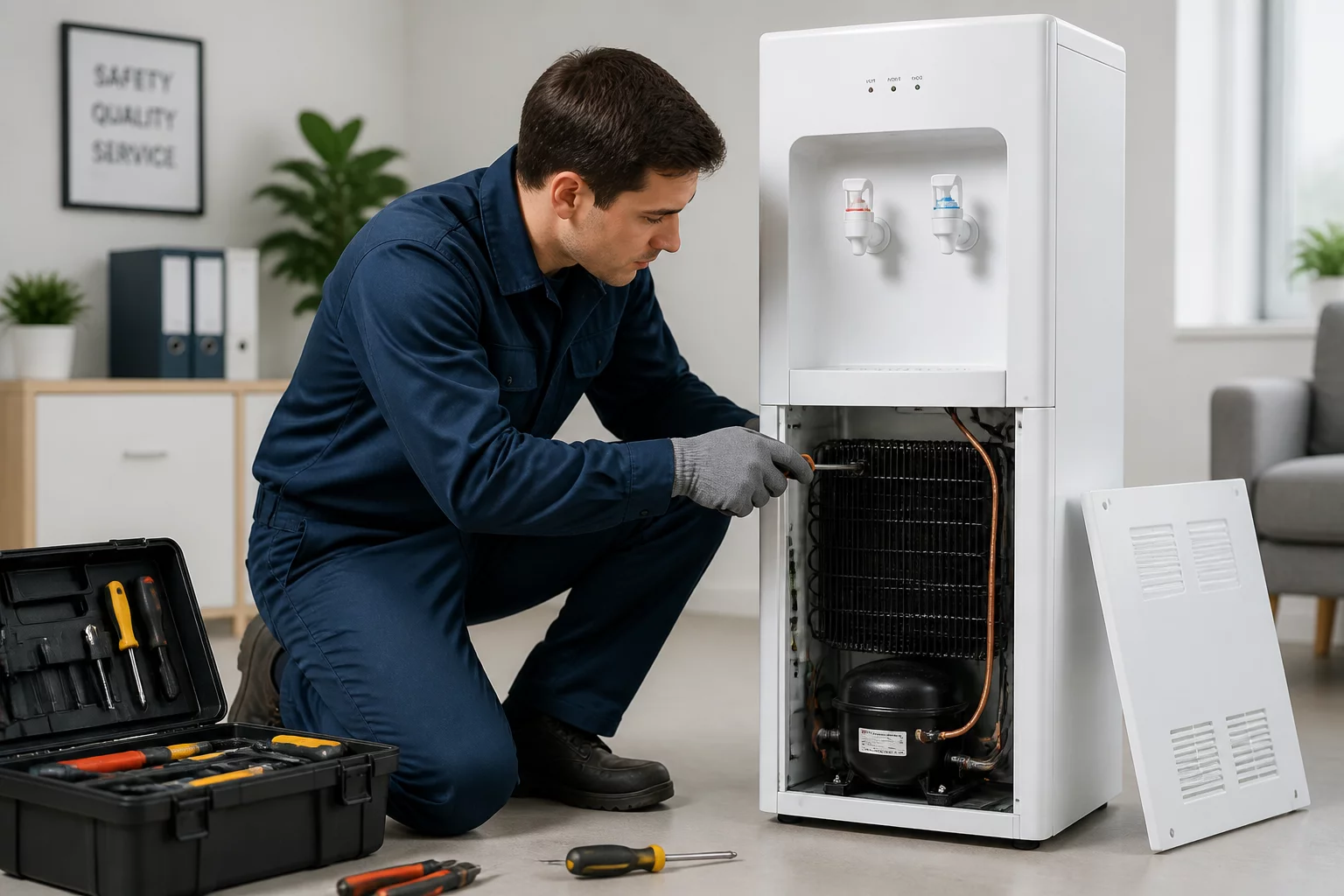
Fixing a floor-standing water dispenser.

Expert Diagnostics for Bottled and Direct-Line Dispensers

A broken water dispenser disrupts hydration in residential kitchens and busy office environments. Common faults arise from mineral scale clogging heating chambers, refrigerant loss inside the compressor cooling loop, or punctured silicone tubes resulting in base pooling. Our specialists thoroughly examine all mechanical valves, thermostat switches, and electrical sensors to pinpoint root failures accurately.

Key Diagnostic Note

If water fails to chill despite an active indicator light, the issue frequently stems from a failed compressor starter relay or compromised temperature sensor rather than complete refrigeration loss. Shut off power immediately if water begins overheating beyond normal boiling thresholds.

Comprehensive Repair and Sanitization Capabilities

Routine maintenance extends cooling efficiency and prevents microbial accumulation in reservoir tanks. Our team brings specialized replacement parts directly to your doorstep in Ajman, handling emergency fixes for all prominent floor-standing and under-counter models.

Temperature Regulation

Calibration and replacement of bimetallic thermostats, cold tank sensors, and heating band elements for rapid hot and cold output.

Leak & Pump Remediation

Restoration of bottom-loading suction pumps, internal check valves, dispensing faucets, and cracked water delivery pipes.

Step-by-Step Inspection Checklist

  • Check electrical continuity across power supply boards, fuse holders, and compressor capacitors.
  • Inspect silicone seals, drain plugs, and dispensing tap push levers for hidden stress cracks.
  • Perform food-grade citric descaling and test heating and cooling cycles under standard load.

Frequently Asked Questions

Customer Experiences & Discussion

0 Insights
No comments yet. Be the first to leave a comment about our water dispenser repair service.

Leave a Comment

Share your feedback, appliance model observations, or questions with our technical team.

Service guide

Water Dispenser Hygiene and Fault Checks

Identify the type of dispenser

Tell us whether the unit uses a bottle or direct water connection and whether the problem concerns cooling, heating, leakage, weak flow, or unusual noise.

Keep water-contact areas clean

Follow the manufacturer's cleaning and sanitising instructions, use potable water, and replace bottles or filters as recommended. Do not use unapproved chemicals inside the water path.

Possible repair areas

A technician may inspect the thermostat, compressor or cooling system, heater, tap assembly, float, pump, water valve, or seals depending on the design.

Disconnect if unsafe

If water is leaking onto the power cord or electrical area, stop using the dispenser and disconnect power only if it is safe to do so. Arrange inspection before using it again.

Detailed repair information

Water Dispenser Repair, Temperature and Hygiene

Water dispensers may use bottled or plumbed water, with separate hot and cold circuits on some models. A fault can affect dispensing, temperature, leakage or hygiene, so the dispenser type and the exact symptom should be recorded before arranging service.

Water does not dispense or flow is weak

For a bottled unit, confirm that the bottle is correctly seated and that any cap or seal has been removed as instructed. For a plumbed model, check the visible supply valve and hose for kinks. A clogged filter, air lock, pump or internal valve can also restrict flow. Do not open the housing while connected to power.

The water is not cold or hot enough

Allow for the model's recovery time after repeated use and check the relevant switch and settings. If temperature remains outside normal performance, a thermostat, cooling system, heating element or control may need inspection. Never test internal heaters or cooling components yourself.

Water leaks from the cabinet or connection

Stop dispensing and identify whether the leak is from the bottle area, tap, drip tray or visible inlet connection. Unplug the appliance only if the plug and surrounding area are dry and safe to reach. If water is near electrical parts, keep away and isolate power at a safe point if possible.

Water tastes unusual or the dispenser appears dirty

Stop drinking water from the unit until the cause is understood. Clean external contact areas and replace filters only as recommended by the manufacturer. Persistent odour, slime, discolouration or contamination may require sanitisation and inspection of water-contact components.

How diagnosis and repair should work

The technician should first determine whether the dispenser is bottle-fed or connected to a water line, then inspect the visible connections, taps, reservoir, filter arrangement and temperature controls. Repairs may involve a pump, valve, thermostat, heater, cooling assembly or electrical control. Any sanitisation should use a method and products appropriate for the appliance and its drinking-water contact surfaces.

Maintenance that may prevent repeat problems

Follow the manufacturer's schedule for cleaning reservoirs and taps, replacing filters and sanitising water-contact parts. Empty the drip tray regularly and avoid touching dispensing outlets with hands or used containers. If the unit is plumbed, check visible hoses periodically and arrange prompt attention for persistent dampness or unusual water quality.

Frequently asked questions

These answers are general guidance. Appliance designs vary, so always follow the manufacturer's manual and use a qualified technician for hazardous or internal repairs.

Can I continue using a dispenser that is leaking?

Stop using it until the leak source is identified, especially if water may reach electrical parts.

How often should a filter be replaced?

Follow the filter and dispenser manufacturer's specified interval and consider water quality and usage. Do not rely on a generic interval for every model.

Why is the water not cold immediately after several cups?

Some models need recovery time. If the problem continues after the stated recovery period, the cooling system or controls may need inspection.

Safety comes first

Stop using an appliance if you notice smoke, a burning smell, exposed wiring, repeated electrical tripping, a gas smell, a damaged microwave door or water near electrical components. Do not bypass safety devices or open sealed/high-voltage systems. Isolate power or water only when it is safe to do so and contact an appropriately qualified service professional.